



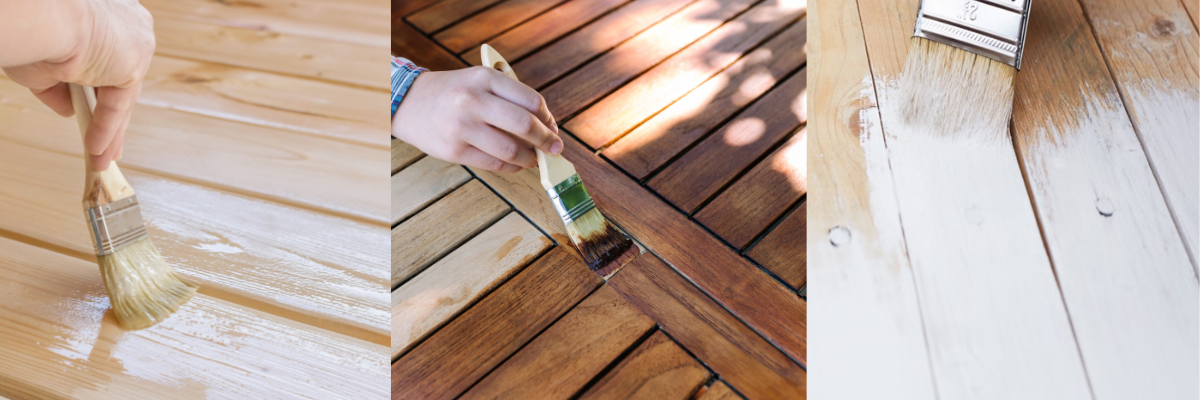
Wood Coating Additives for a Variety of Formulations
December 22, 2025 | Blog
Wood coatings are essential to preserve and enhance the natural beauty of wood surfaces. They protect against environmental stressors, resist wear, and highlight the unique grain and texture that make wood desirable across applications.
However, achieving long-lasting protection and appearance requires more than just a good formulation. End users expect coatings that resist stains, scratches, and scuffs while maintaining color, clarity, and smoothness across diverse substrates. That is where additives make a difference.
The Benefits of Additives for Clear, Semi-Pigmented, and Pigmented Wood Coatings
Additives play a critical role in how well a wood coating performs and how long the attractive appearance lasts. From improving dry time and durability to enhancing flow, color development, and surface quality, the right additive package helps formulators overcome common challenges and achieve consistent performance, from matte to high gloss formulations.
- Additives for clear wood coatings: provide wrinkling prevention, faster dry times, enhanced chemical resistance, improved storage stability, and better thickening for smoother substrates.
- Additives for semi-pigmented wood coatings: offer higher transparency, better color development, and improved substrate wetting.
- Additives for pigmented wood coatings: provide reduced sagging with addition of colorant, enhanced stain resistance, better blocking resistance, faster dry times, and reduced yellowing.
 The Benefits of Additives for Clear Wood Coatings
 The Benefits of Additives for Clear Wood Coatings
Sealing a wood substrate with a clear coating elevates the wood’s natural warmth and grain definition, giving surfaces a smooth, glossy finish while protecting against moisture, wear, and leaching of wood components. However, without the proper additives, clear coats may end up diminishing the final look of a wood surface.
Improved Wrinkling Prevention and Faster Curing
When applying paint, end users expect the finish to look as good dry as it does wet. However, if the paint is applied too thickly or in high temperatures, wrinkling can occur—negatively impacting the final appearance.
High-performance catalysts like Borchi® OXY-Coat help prevent wrinkling upon curing.
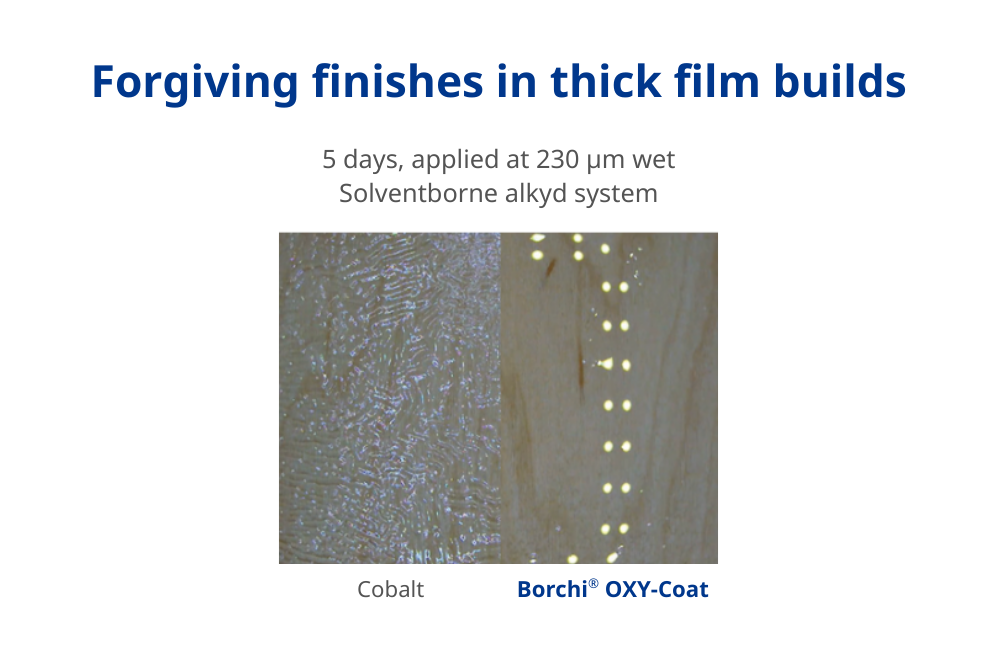
Watch the full curing time lapse video
Many formulators are also turning to linseed oil–based wood coatings for their lower Volatile Organic Compound (VOC) content, which supports improved labeling and compliance. However, these systems can often slow down drying times.
Borchi OXY-Coat 1310 addresses this challenge, improving cure speed in linseed oil formulations without compromising performance or appearance. 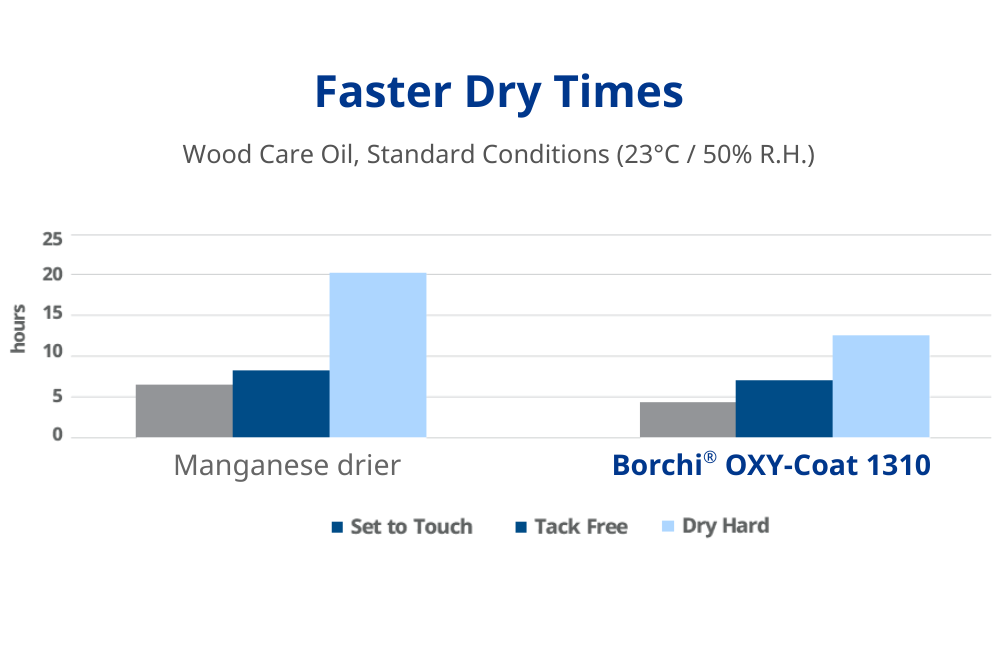
Download the wood care oil formulation
Enhanced Chemical Resistance
From flooring and furniture to industrial crates, wood is used across a wide range of surfaces. Many of which are exposed to substances that can cause staining or surface damage.
Borchi OXY-Coat 1310 high-performance catalyst helps strengthen chemical resistance in natural oils used for wood coatings, protecting surfaces from common agents like water and cleaning chemicals. This example demonstrates improved resistance to both water and ammonia water in a wood care oil. 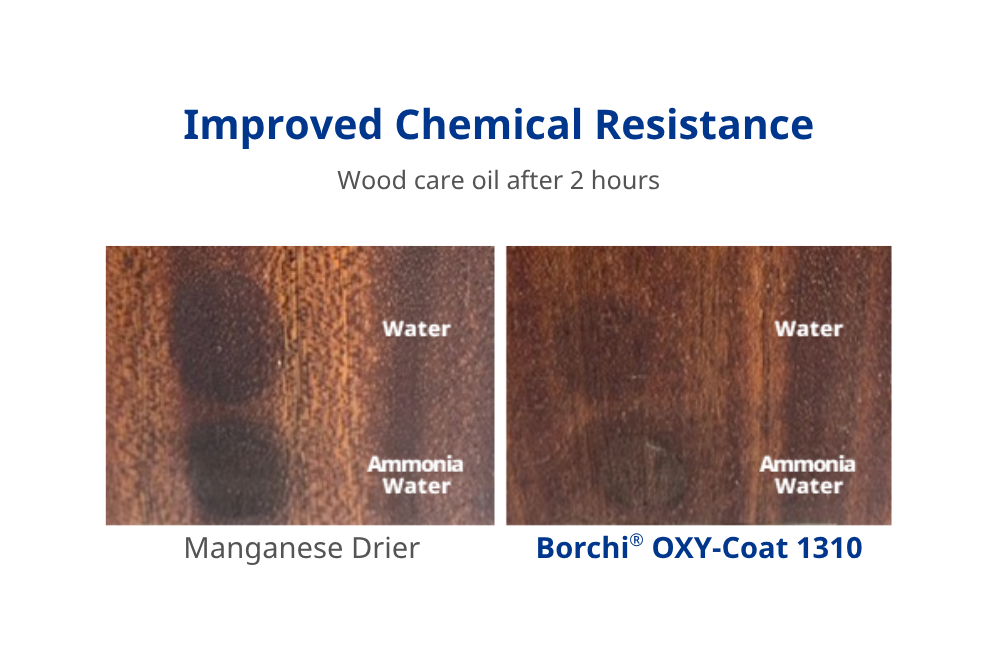
Download the wood care oil formulation
Better Viscosity and Storage Stability
Enhancing viscosity in alkyd emulsions helps ensure ease of application and better storage stability of the emulsion.
Rheology modifiers like our Borchi Gel A LA ASE thickener build viscosity to improve application properties and enhance overall storage stability. 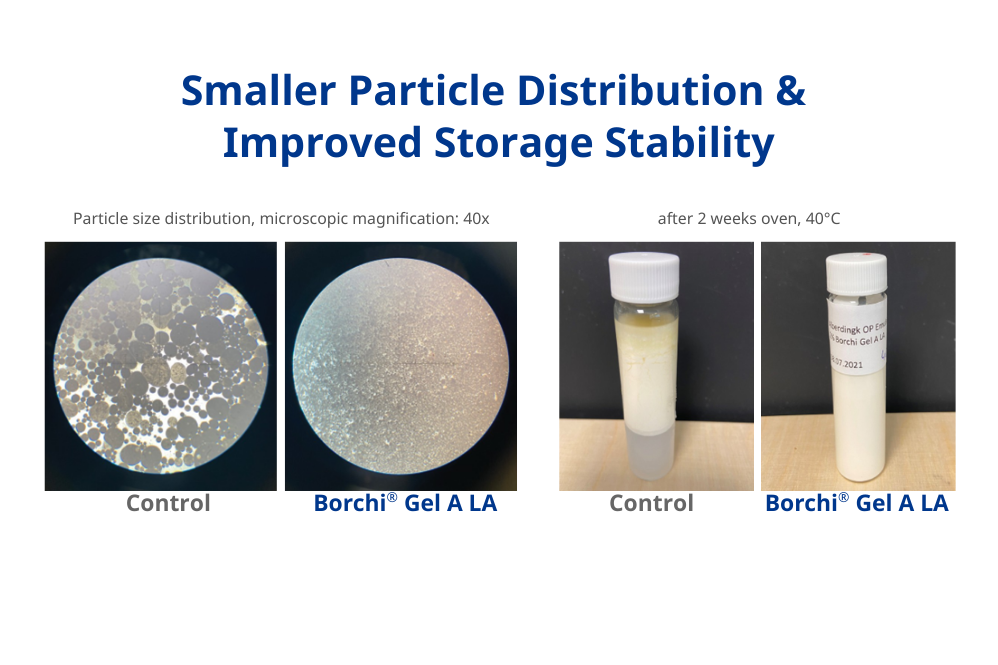
Download the waterborne wood stain formulation
Enhanced Thickening for Smoother Substrates
Adequate thickening helps coatings spread evenly and penetrate porous substrates. The multifunctional rheology modifier Borchi Gel L 75 N helps improve substrate wetting upon spraying. This additive allows for waterborne coatings to flow into porous wood substrates for a smooth finish. 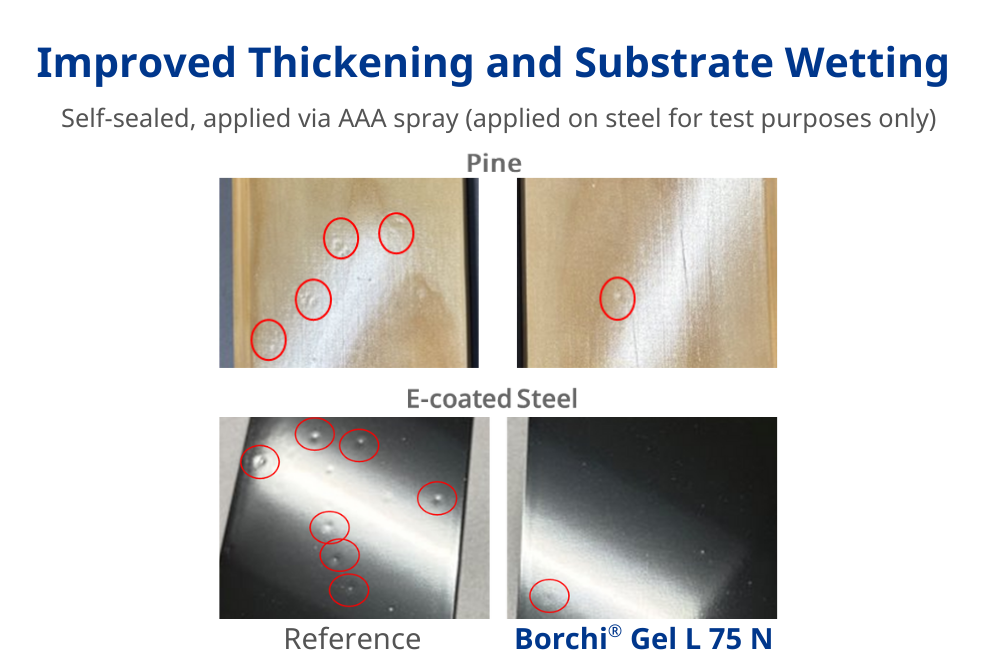
Download the simplified screening formulation
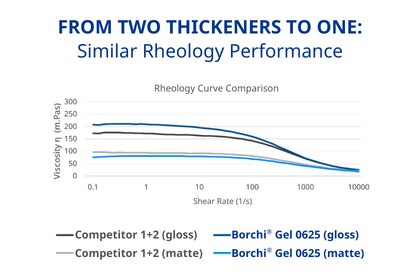
In a waterborne spray coating for UV-cured OEM applications, Borchi Gel 0625 showed dual-thickener performance compared to two competitive rheology modifiers. As a coating ingredient, no substance of concern is identified in this rheology modifier under IKEA IOS-Mat-0066 (Vers. AA-163938-11) and IKEA IOS-Mat-0010 (Vers. AA-10911-11).
Download the starting point formulation
back to list of wood coating types
The Benefits of Additives for Semi-Pigmented Wood Coatings
To further enhance the appearance of wood substrates, semi-pigmented formulations allow for an elevation of color.
High-Quality Transparency and Color
Iron oxide pigments are widely used in wood coatings for their cost effectiveness and exceptional durability. Their fine particle size enables versatile use, including transparent finishes that highlight the natural beauty of wood.
However, achieving uniform dispersion and stabilization can be challenging.
Wetting and dispersing agents like Borchi Gen 1750 enhance dispersions in transparent iron oxide pigment formulations. This contributes to better visibility of the wood substrate and ideal color development. 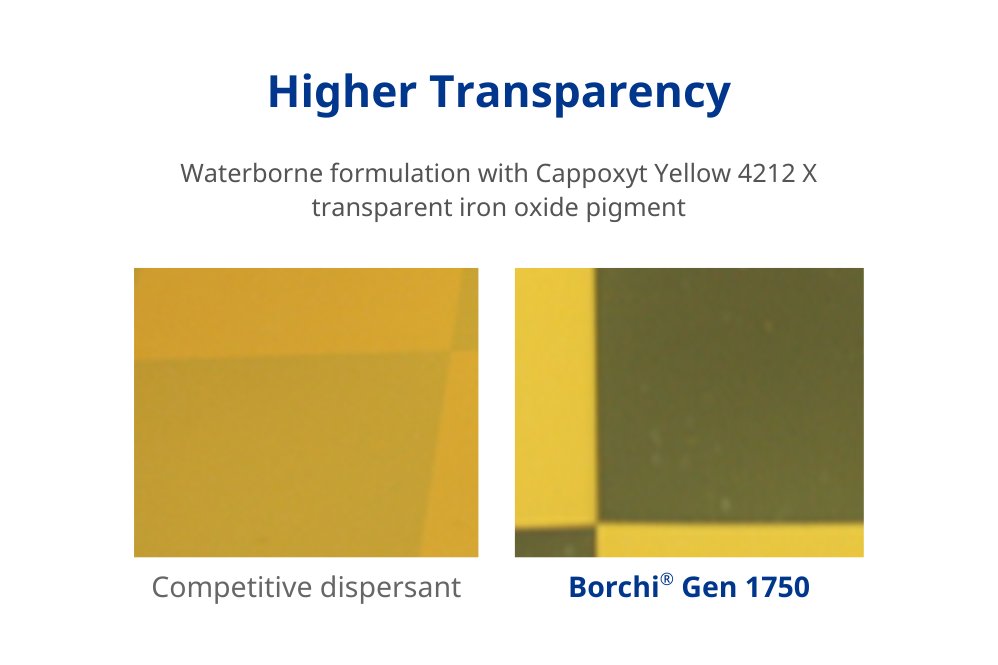
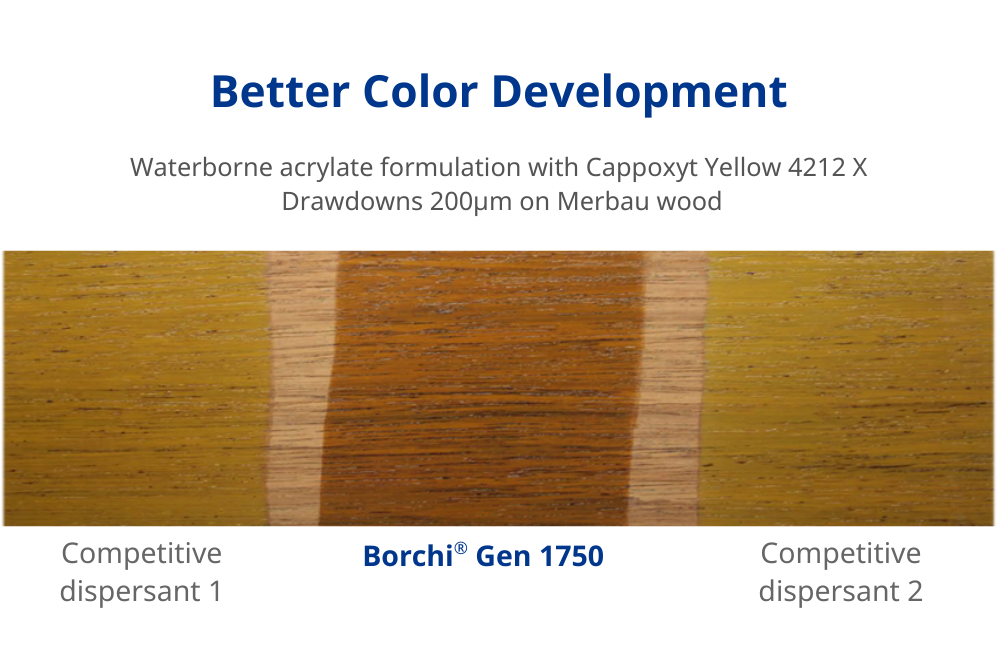
Download the pigment grind formulation
Substrate Wetting
Waterborne coatings have become popular because of their lower Volatile Organic Compound (VOC) content. However, their inherently high surface tension can hinder proper surface coverage that often leads to coating defects such as pinholes and craters, as well as issues caused by leaking wood extractives that can further disrupt the coating.
Substrate wetting additives like Borchi Gol 1570 lower surface tension to improve substrate wetting. This helps preserve the final appearance of wood coatings. 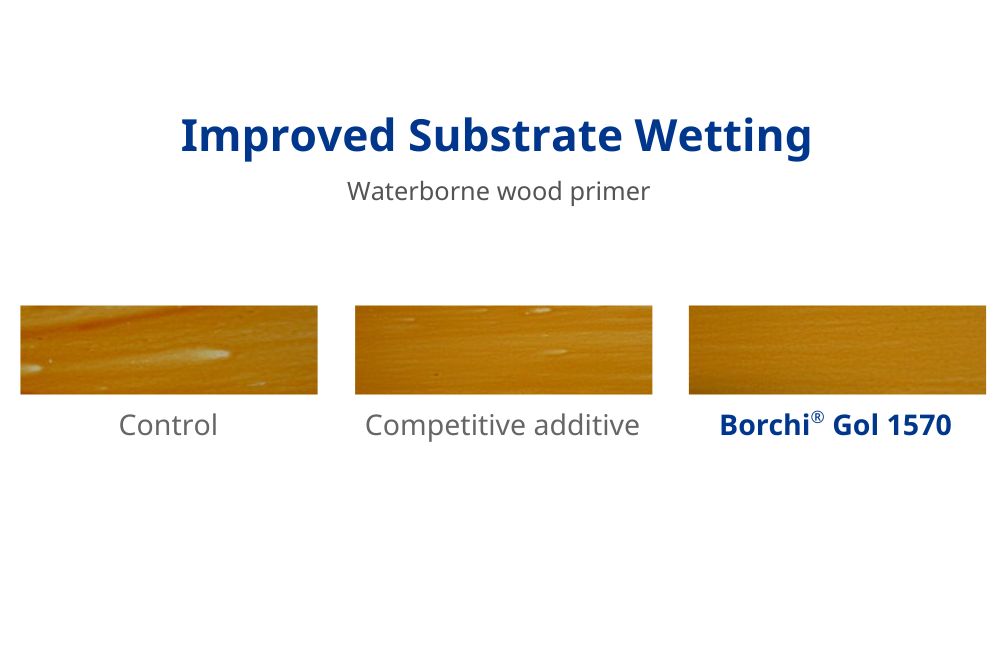
Download the waterborne wood primer formulation
back to list of wood coating types
The Benefits of Additives for Pigmented Coatings
 The Benefits of Additives for Pigmented Coatings
Reduced Sagging with Addition of Colorant
Adding pigment concentrates to wood coatings can lower viscosity, which may lead to sagging during application. Post-adding a rheology modifier such as Borchi Gel PN helps maintain an even film thickness and prevents sagging, ensuring consistent coverage even with the addition of colorants. 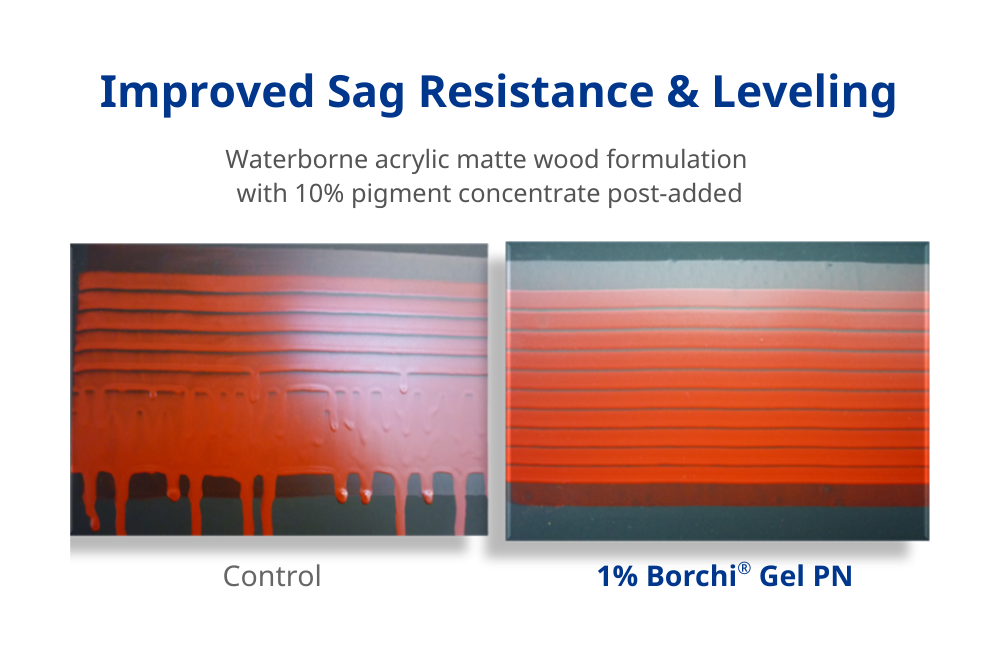
Download the acrylic starting point formulation
Dispersant for Improved Stain Resistance and Gloss
White coatings on wood substrates remain a popular choice for their clean, bright appearance. But maintaining that look can be difficult. White finishes are prone to staining when exposed to liquids and everyday wear.
Wetting and dispersing additives, like Borchi Gen 1252, improve dispersions in white titanium dioxide (TiO2) pigment formulas. This not only improves color storage stability and brightness but also enhances stain resistance and gloss retention, keeping white coatings looking newer for longer.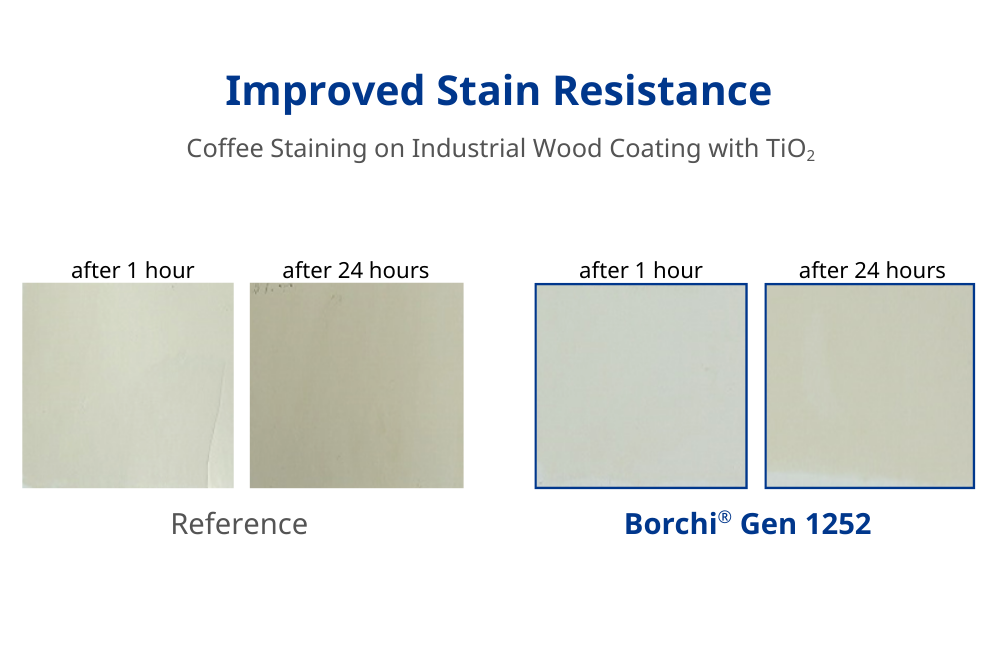
Better Blocking Resistance
Painting doors, windows, or cabinetry often introduces a common challenge—paint sticking to adjacent surfaces such as door jambs, windowsills, or sliding panels.
Flow and leveling agents like Borchi Gol 1375 improve film formation and provide superior blocking resistance, helping prevent surfaces from sticking together in decorative wood applications.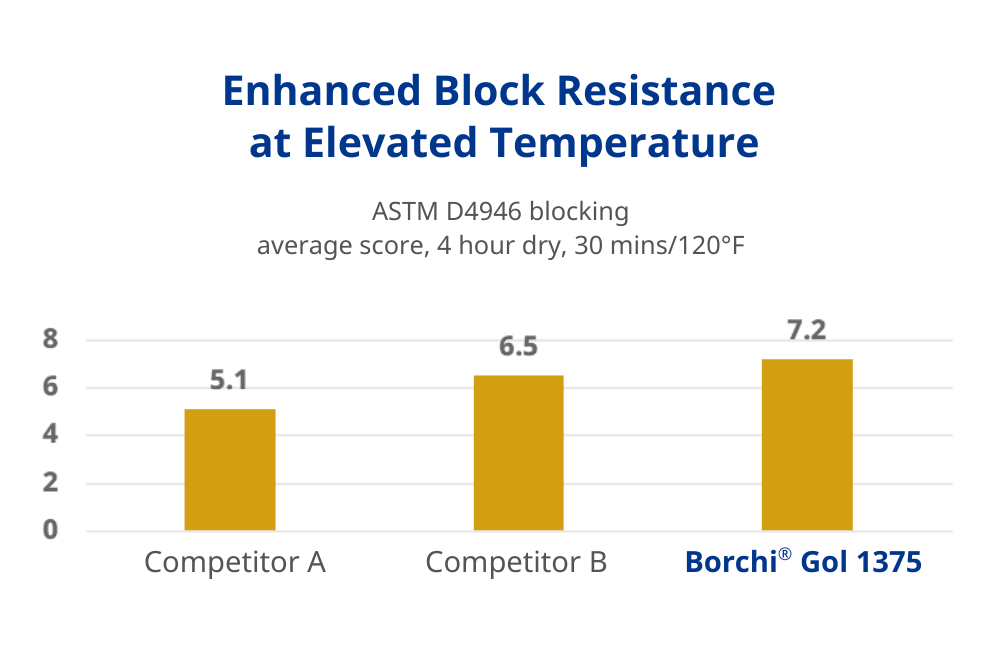
Download the 100% acrylic white semi-gloss formulation
Faster Dry Times and Reduced Yellowing in Alkyds
Borchi high-performance catalysts help ensure fast drying times in alkyd formulations applied in a variety of environments. These solutions can outperform traditional driers like cobalt.
Over time, white coatings can develop unwanted yellow tones. Beyond reducing dry times, Borchi OXY-Coat high-performance catalysts enhance the durability of alkyd coatings by minimizing yellowing and maintaining color stability throughout the product’s lifespan.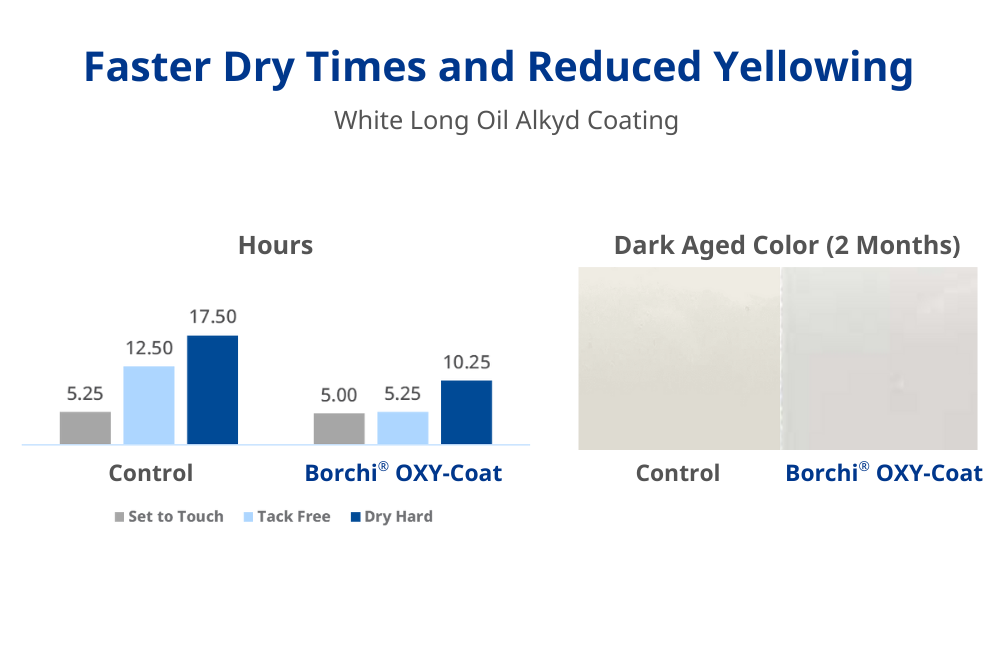
Download the formulation with Borchi OXY-Coat post-added to a long oil alkyd paint
back to list of wood coating types
Summary & Conclusion
With wood substrates being ubiquitous, formulating coatings that ensure optimal aesthetics and durability is critical. Coating additives can make a significant difference in the performance of various wood coating formulations. Benefits include fast dry times, excellent color, improved substrate wetting, and enhanced rheological properties for optimal application.
By formulating with Borchers’ coating additives, manufacturers can deliver products that meet high expectations for aesthetics, protection, and regulatory compliance—ensuring wood’s natural beauty endures for years to come.
Share

Related Articles
Regulatory Update on Cobalt and its Compounds – USA
In June 2022, the United States Environmental Protection Agency (U.S. EPA) prioritized Cobalt and Cobalt Compounds for risk assessment and...
LEARN MORE »
Why now is the time to switch to oxime-free anti-skins in alkyd paints
Alkyd coatings are still widely used today for their unique application feel, forgiving and easy to use finishes, and excellent...
LEARN MORE »
Architectural Coating Additives: The Key to Better Color, Flow, and Durability
What Really Makes an Architectural Coating Perform? Looking beyond color Architectural and decorative coatings are often judged by what...
LEARN MORE »