




5 Ways Additives Improve Direct-to-Metal (DTM) Coating Performance
January 20, 2026 | Blog
Direct-to-metal (DTM) coatings work under pressure. From industrial equipment and machinery to exterior structures and metal components, these coatings must protect against corrosion, resist chemical exposure, maintain adhesion, and dry quickly enough to keep production moving. For formulators and R&D teams, success depends on understanding the performance levers that truly matter and selecting DTM additives that can deliver reliable results.
Five ways additives help elevate high-performance DTM coating formulations include:
- Enhanced corrosion protection with high-performance catalysts, corrosion inhibitors, and wetting and dispersing agents
- Improved wet adhesion with high-performance catalysts, substrate wetting agents (particularly in polyaspartic coatings), and adhesion promoters
- Better substrate wetting on contaminated substrates with flow and leveling agents
- Faster dry times in various conditions with high-performance catalysts and tin-free catalysts
- Minimize moisture-related defects with moisture scavengers for polyurethane coatings
Below are product highlights paired with examples showing how Borchers additives make a difference.
1. Enhanced Corrosion Protection Prevents Premature Failure
Why It Matters
Corrosion is one of the most common reasons for metal coatings to fail. DTM coatings are commonly exposed to environmental factors like moisture, oxygen, salts, pollutants, and adverse temperatures. Metals exposed to these elements are likely to experience degradation over time.
Using a coating formulation with additives that help protect against corrosion can increase the longevity of direct-to-metal applications.
How Borchers Helps
For superior corrosion protection, Borchers offers solutions specifically designed to enhance barrier performance in metal coatings:
in alkyd coatings
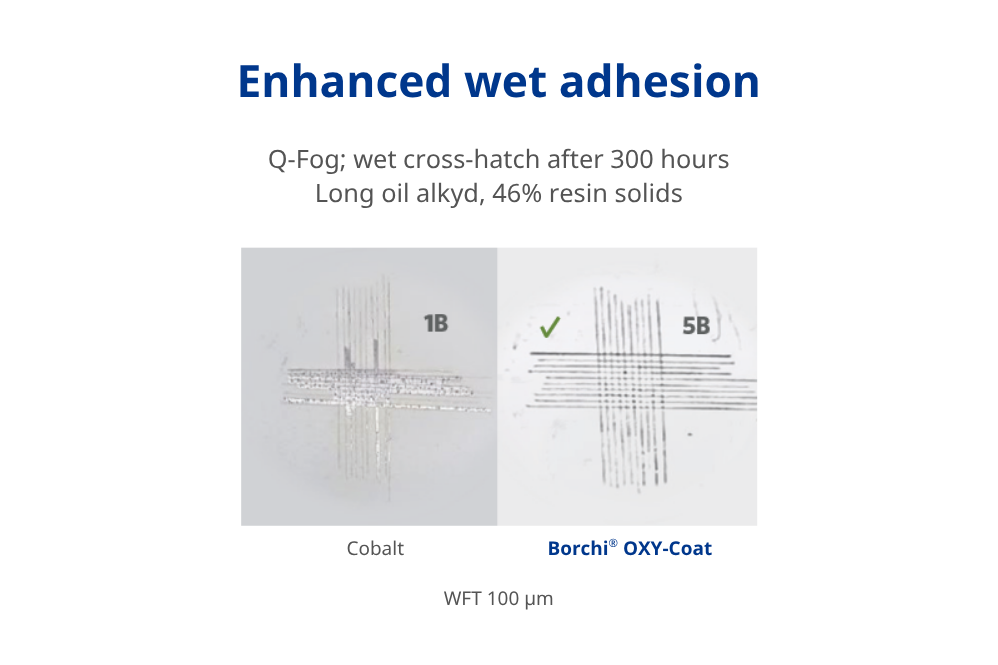
Borchi® high-performance catalysts are popular for their durability properties in alkyd-based coatings. These cobalt-free solutions accelerate dry times, improve wet adhesion, and enhance corrosion resistance in direct-to-metal applications. Borchi OXY-Coat high-performance catalysts also reduce yellowing, and enable coatings to perform reliably in adverse weather conditions, all without the regulatory challenges associated with cobalt.

in various coatings
Bayoxide® Z active is a zinc oxide-based active anticorrosive additive that improves corrosion protection, coating hardness, and overall performance in both coatings and adhesives.
in waterborne coatings requiring proper pigment wetting and stabilization
Borchi Gen 1750 is a multi-functional, VOC-free polyurethane wetting and dispersing agent that supports pigment wetting and stabilization in waterborne coatings.
When pigments are not properly dispersed, the coating can form weak spots that allow moisture and oxygen to reach the metal surface. This leads to rust, blistering, and reduced durability. A uniform, well-dispersed pigment system is essential to creating a strong and stable barrier that protects metal over time.
While Borchi Gen 1750 does not directly prevent corrosion, unlike many wetting agents, it ensures uniform pigment distribution in vulnerable waterborne coatings without negatively affecting corrosion protection properties.
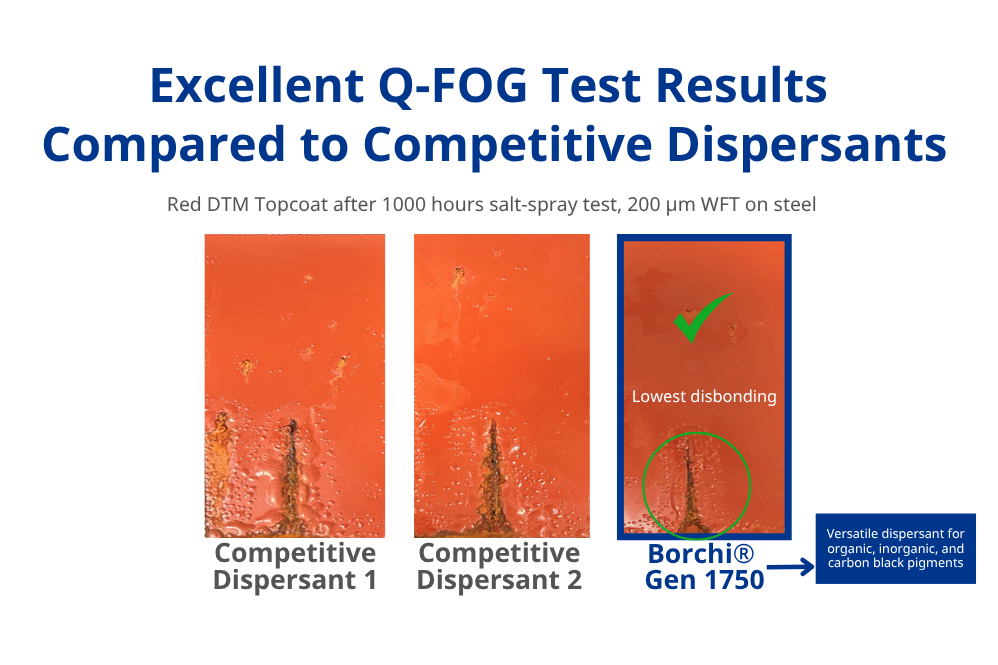
By using corrosion-focused additives like Borchi OXY-Coat or Bayoxide Z and ensuring proper dispersions using Borchi Gen 1750, formulators can achieve both excellent appearance and reliable metal protection.
back to DTM additive benefits list
2. Improved Wet Adhesion Ensures Reliable Bonding to Metal Surfaces
Why It Matters
Adhesion failures are common in DTM coatings, particularly on difficult metal substrates. If a coating does not fully wet the surface, it cannot form a strong bond. This leads to problems like blistering, peeling, or early coating failure, especially when moisture or humidity is present. Strong wet adhesion helps the coating stay in place and perform as expected over time.
How Borchers Helps
Borchers offers additives for improving wet adhesion across different coating systems:
in polyaspartic coatings
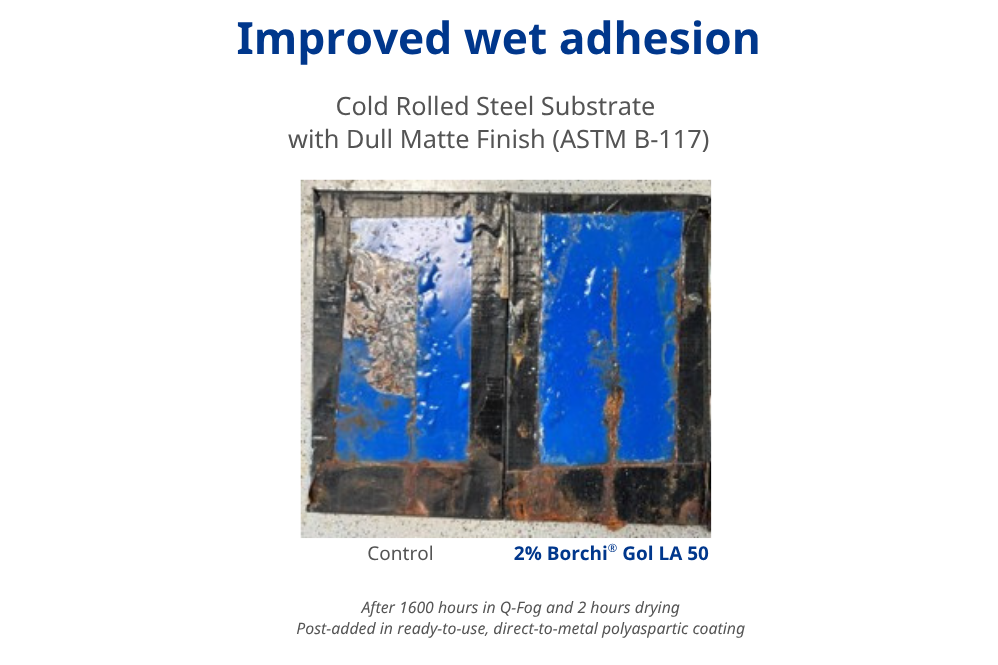
Borchi Gol LA 50 is a polyether modified polysiloxane additive for improved substrate wetting, flow, and leveling properties in water- and solvent-based coatings systems. In DTM applications, especially in fast curing polyaspartic systems, its ability to lower surface tension is essential for achieving complete surface coverage before the coating begins to cure.
Polyaspartic coatings cure quickly, which can limit how well they wet out the substrate. When wetting is incomplete, adhesion suffers. Borchi Gol LA 50 helps solve this challenge by giving the coating more time and ability to spread evenly across the metal surface.
When tested in a ready-to-use polyaspartic coating, Borchi Gol LA 50 enhanced both wet and dry adhesion at a 2% dosage.
in polyaspartic and other coatings
Borchi Gen HE (Europe) and Borchi Gen HMP-F (ALL) are high-performance adhesion promoters that improve bonding to metal substrates across a range of coating chemistries. While Borchi Gen HE is validated for European formulations (especially polyaspartic coatings), Borchi Gen HMP-F offers a versatile solution for various global applications.
in alkyd coatings
Borchi OXY-Coat high-performance catalyst improves adhesion by enhancing wetting and improving surface interaction in direct-to-metal alkyd formulations.
back to DTM additive benefits list
3. Better Substrate Wetting Improves Consistency on Contaminated or Rough Surfaces
Why It Matters
Metal surfaces in real-world conditions are often oily, dirty, rough, or uneven. If the coating cannot fully wet the surface, it will not form a continuous film. This can lead to defects such as cratering, pinholes, fish eyes, or poor leveling. Strong substrate wetting helps the coating spread evenly so it can bond properly and deliver a smooth, uniform finish.
How Borchers Helps
in various coatings
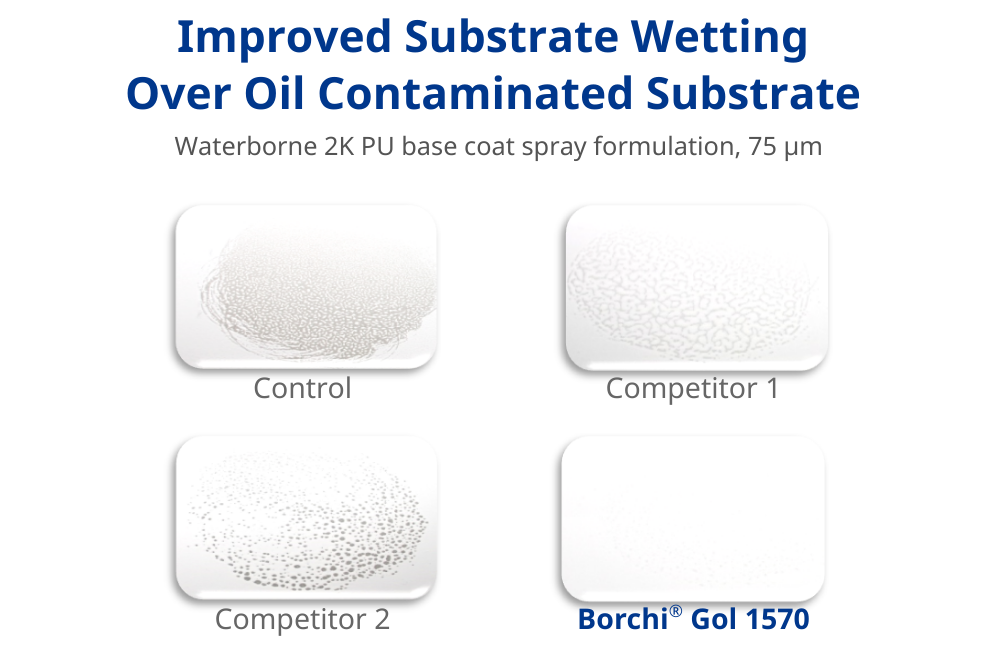
Borchi Gol 1570 is a modified polydimethylsiloxane substrate wetting agent for improved flow and leveling properties in coatings systems. This low molecular weight additive is 100% active and VOC-free. It is designed to deliver efficient substrate wetting in both solvent-based and water-based systems.
By lowering surface tension, Borchi Gol 1570 helps the coating break through surface contaminants and irregularities so it can form an even, defect free film. This is especially important in DTM applications where surface preparation environments may not always be ideal and where uniform film formation is essential for adhesion and long-term durability.
back to DTM additive benefits list
4. Fast Dry Times in Standard and Adverse Conditions Increase Throughput and Reduce Downtime
Why It Matters
Drying and cure speed have a major impact on production efficiency. Slow dry times can delay handling, create bottlenecks on the line, and increase the risk of dirt pickup or print-through. In DTM applications, faster curing helps the coating reach early hardness and durability, so it can withstand real-world service conditions sooner.
How Borchers Helps
Borchers offers solutions for accelerating dry times across multiple coating systems:
in alkyd coatings
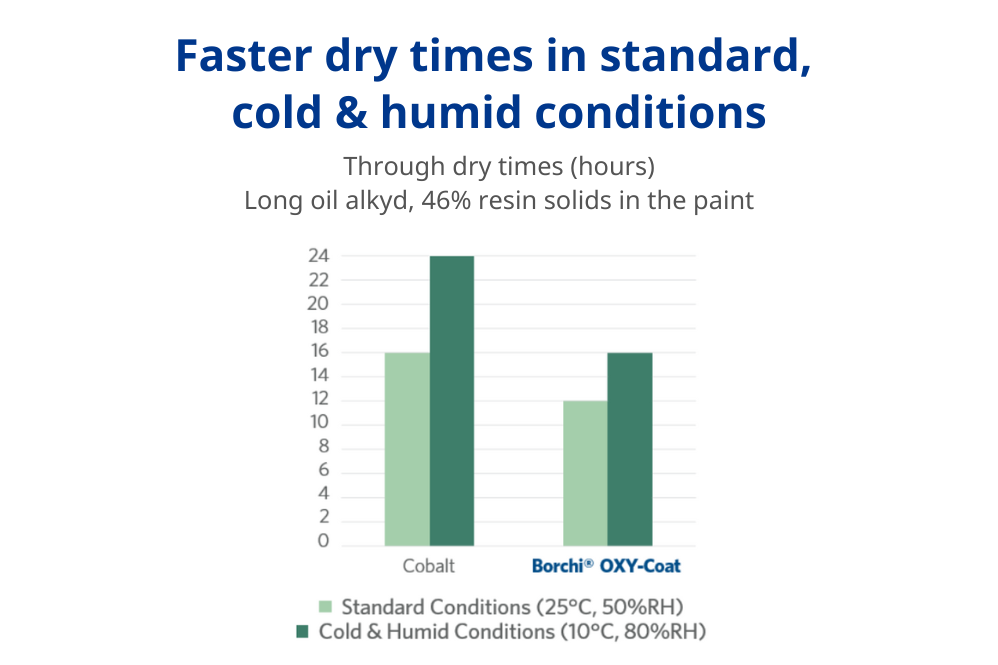
Borchi OXY-Coat cobalt-free high-performance catalyst for alkyd coatings improves drying in both standard and adverse conditions, extending the usable coating season in challenging environments. Along with accelerating cure, this solution provides other durability benefits like reduced yellowing and enhanced adhesion. Overall, Borchi OXY-Coat enables consistent performance in direct-to-metal applications.
in polyurethane coatings
Borchi Kat 2115 is a next generation tin-free catalyst designed for one and two component polyurethane systems. It provides a strong balance of cure speed and application workability, which is essential for DTM metal coatings that need fast dry without sacrificing final film performance.
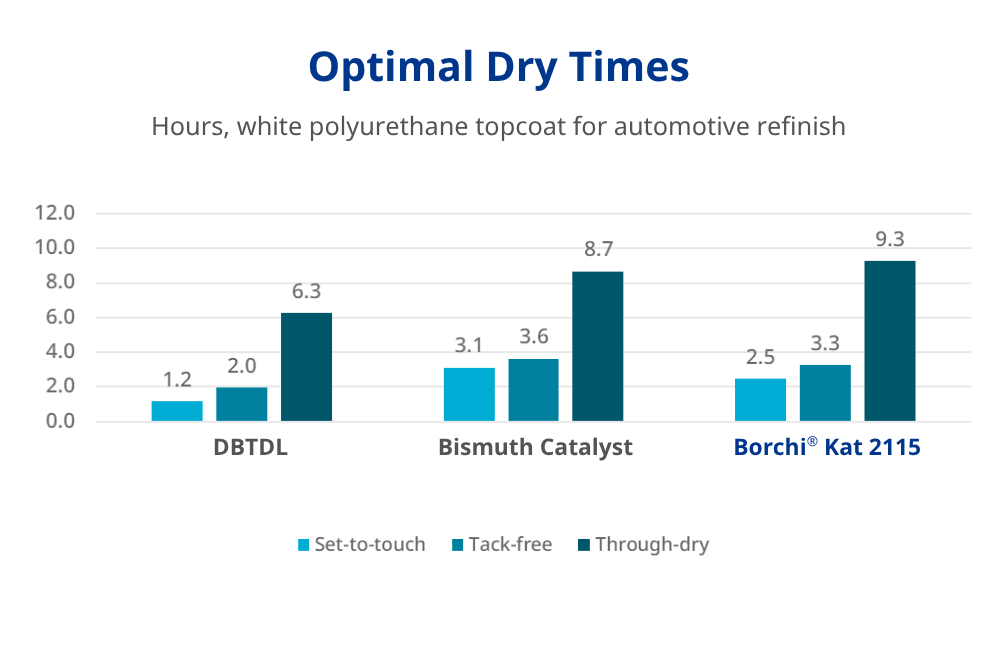
Borchi Kat 2115 is based on a neodecanoate mixed metal technology that can replace DBTDL, DOTL, and many amine-based catalysts. It also offers improved labeling compared to traditional bismuth octoates since it is free of 2-ethylhexanoic acids.
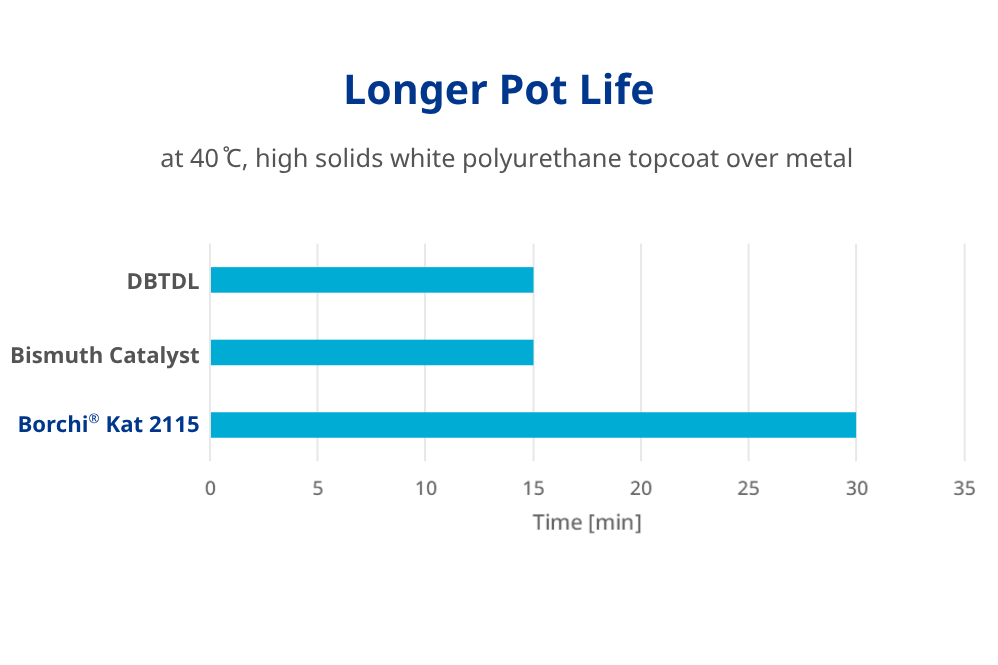
One of the most valuable advantages of Borchi Kat 2115 is its ability to deliver optimal dry times while also providing a longer pot life. This combination supports smoother application, better flow, and more flexibility for applicators, especially in warm or humid conditions.
back to DTM additive benefits list
5. Moisture Scavengers Reduce Defects
Why It Matters
Moisture is a common source of defects in polyurethane coatings. When water interacts with isocyanates in the coating, it can release carbon dioxide (CO₂), causing bubbling, foaming, haze, or reduced gloss. These defects compromise adhesion, film integrity, and corrosion protection. Storage stability is also impacted by high humidity, heat, or precipitation, making moisture control essential for maintaining coating performance from production through application.
How Borchers Helps
in polyurethane coatings
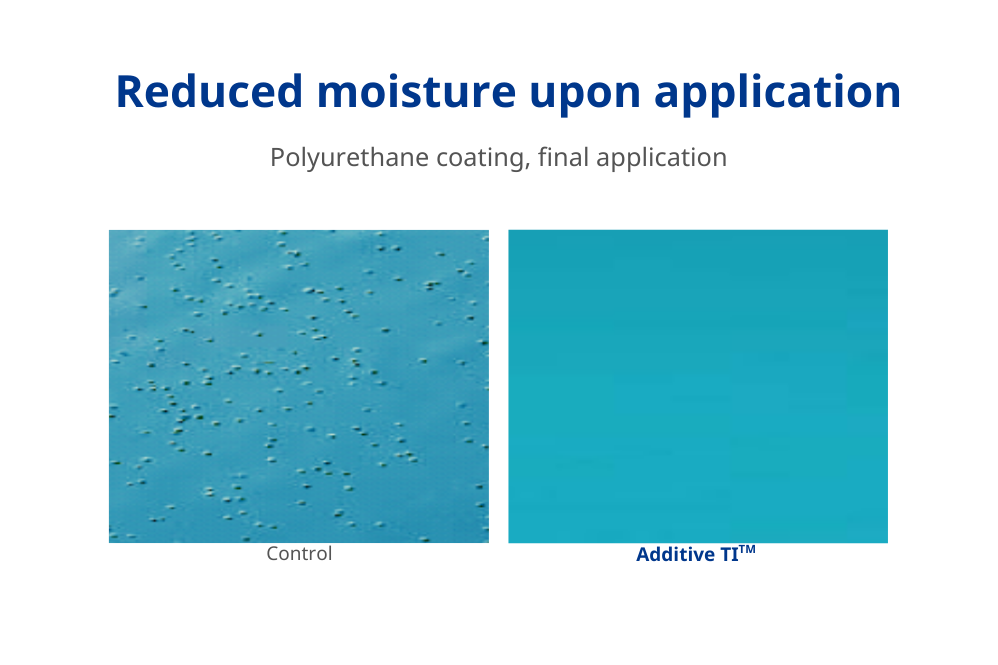
Borchers offers high-performance moisture scavengers, like Additive TITM and Additive OF, to minimize moisture-related defects in polyurethane coatings, which are often used for their durability in DTM applications.
Additive TITM is a fast-acting moisture scavenger for short-term dehydration. It reacts quickly with residual water to prevent CO₂ formation and surface defects in 1K and 2K polyurethane coatings. Additive TITM is colorless, low-viscosity, and can be added during production without impacting color or clarity.
Additive OF is a long-term moisture scavenger that stabilizes polyurethane packages over time. It chemically converts water in the system, reducing foaming, haze, and gloss issues. Additive OF can be added to both polyol and isocyanate components and provides sustainable long-term protection against moisture-related defects.
By incorporating these moisture scavengers (especially when used together), formulators can improve storage stability, reduce defects, and maintain smooth, uniform coatings even under humid or challenging environmental conditions. Both additives ensure polyurethane coatings cure properly, adhere consistently, and deliver the high-performance finish customers expect.
back to DTM additive benefits list
Explore These Additives & Others for DTM Coatings
Formulating DTM coatings requires a careful balance of durability, adhesion, corrosion resistance, wetting performance, and dry speed each influenced directly by the additive package. Borchers additives are engineered to strengthen these critical performance areas, helping formulators create coatings that are tough, reliable, and ready for real-world conditions.
Other additives that can improve DTM coating formulations include:
- Rheology modifiers to ensure optimal viscosity, flow, and anti-sag performance
- Defoamers for foam control and reduced defects
- Color boosters and compatibilizers for ideal colorant performance
For more information on additive recommendations, visit the Borchers general industrial additives page.
Have questions? You can also contact our technical experts.
–
BONUS: Reducing Dispersant Dosage in Organic Pigment Grinds for Industrial Coatings
in waterborne coatings
In a recent study by the Borchers technical team, Borchi Gen WNS low molecular weight dispersant was able to provide efficient organic blue pigment dispersions for industrial coatings at a lower DOP than a high molecular weight dispersant alternative.
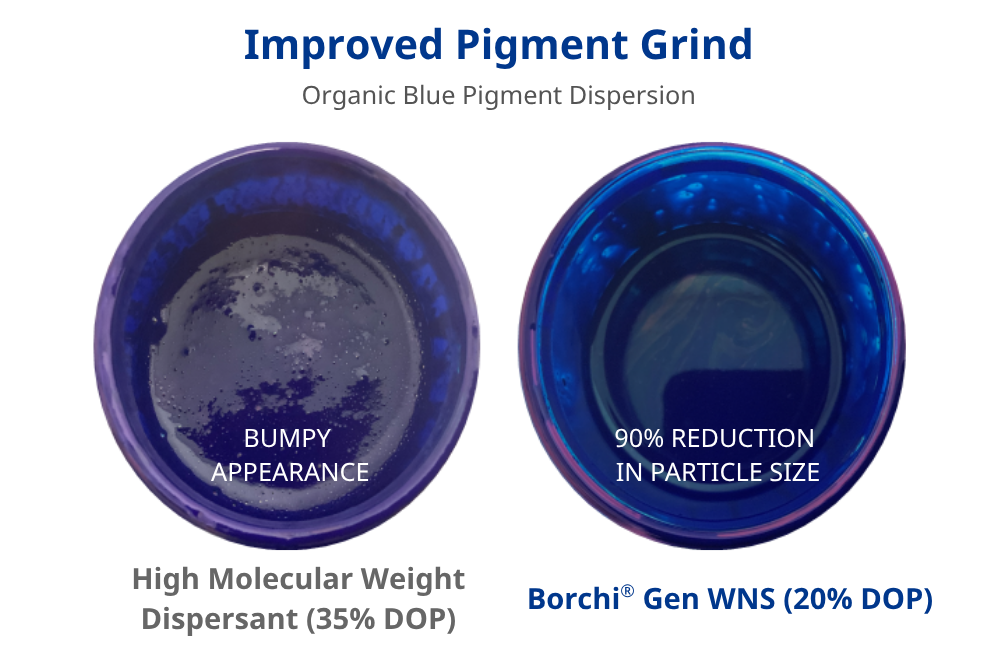
Ready to strengthen your next DTM coating formulations? Connect with our technical team to access starting point formulations and product recommendations.
Share
 Coating Performance)
Related Articles

Additives for Enhanced Aesthetics in Epoxy Floor Coatings
Epoxy coatings are a popular option for flooring. Floors installed in kitchens, garages, manufacturing plants, and office spaces are common...
LEARN MORE »
Sustainability and Regulatory Challenges for Cobalt in the Coatings Industry
Cobalt is known as a highly effective metal that is used in many applications and industries, including use as a...
LEARN MORE »
How to Avoid Upcoming MEKO Carcinogen GHS Labeling Requirements in the European Union and Reformulate Smarter
The European Union (EU) is enacting stricter Methyl Ethyl Ketoxime (MEKO) regulatory requirements beginning on March 1st, 2022. From this...
LEARN MORE »