



Not All Tin-Free Catalysts Are Created Equal
April 24, 2026 | Blog
Across the coatings industry, the shift away from traditional tin catalysts is well underway. Regulatory pressure, environmental considerations, and evolving formulation requirements are pushing manufacturers to explore alternative catalyst technologies for polyurethane systems.
But as many formulators have discovered, replacing tin catalysts is rarely straightforward. Not all tin-free catalysts behave the same way, and performance differences between chemistries can significantly impact coating .
Understanding these differences is key to selecting the right catalyst for today’s high-performance polyurethane coatings.
Why the Industry Is Moving Away from Tin Catalysts
For decades, organotin catalysts such as dibutyltin dilaurate (DBTDL) have been widely used in polyurethane coatings because of their strong catalytic efficiency and broad compatibility.
However, growing regulatory scrutiny and environmental concerns have accelerated the industry’s transition toward tin-free alternatives. Tin compounds have been associated with potential health and environmental risks, and certain materials are now subject to increasingly strict regulations in many regions.
As a result, coatings formulators are actively exploring alternatives based on metals such as:
- Bismuth
- Zinc
- Zirconium
- Mixed-metal catalyst systems
These alternatives can help formulators meet regulatory requirements while maintaining coating performance.
But switching to tin-free catalysts often introduces new formulation challenges.
The Variability Challenge with Tin-Free Catalysts
Tin-free catalysts are not a direct drop-in replacement for tin-containing systems. Their reactivity profiles and interactions with polyurethane chemistry can differ.
Common tin-free options such as bismuth or zinc catalysts can offer regulatory and labeling advantages, but their performance often varies depending on:
- Resin chemistry
- Substrate type
- Environmental conditions
- Coating formulation parameters
This variability means formulators frequently need to adjust catalyst type, dosage, or combinations to achieve the desired balance of properties.
Potential Pain Points with Switching Catalysts
When replacing tin catalysts, formulators can encounter trade-offs that affect processing and final coating performance.
Some common issues include:
Shorter Pot Life
A catalyst’s impact on accelerating the polyol-isocyanate reaction may reduce workable pot life, limiting application windows.
Inadequate Dry Times
Many tin alternatives cannot match the rapid cure kinetics of traditional tin catalysts, resulting in drying times that are not optimal for formulators.
Hardness Development
Achieving the same level of film hardness and mechanical durability can be challenging with some tin-free catalysts.
Performance Inconsistency
Different catalyst types may behave unpredictably across coating systems, making formulation optimization more complex.
For coatings manufacturers, these limitations can create real production challenges.
That’s why catalyst innovation continues to focus on balancing performance with regulatory compliance.
 Introducing Borchi® Kat 2115: A Next-Generation Tin-Free Catalyst
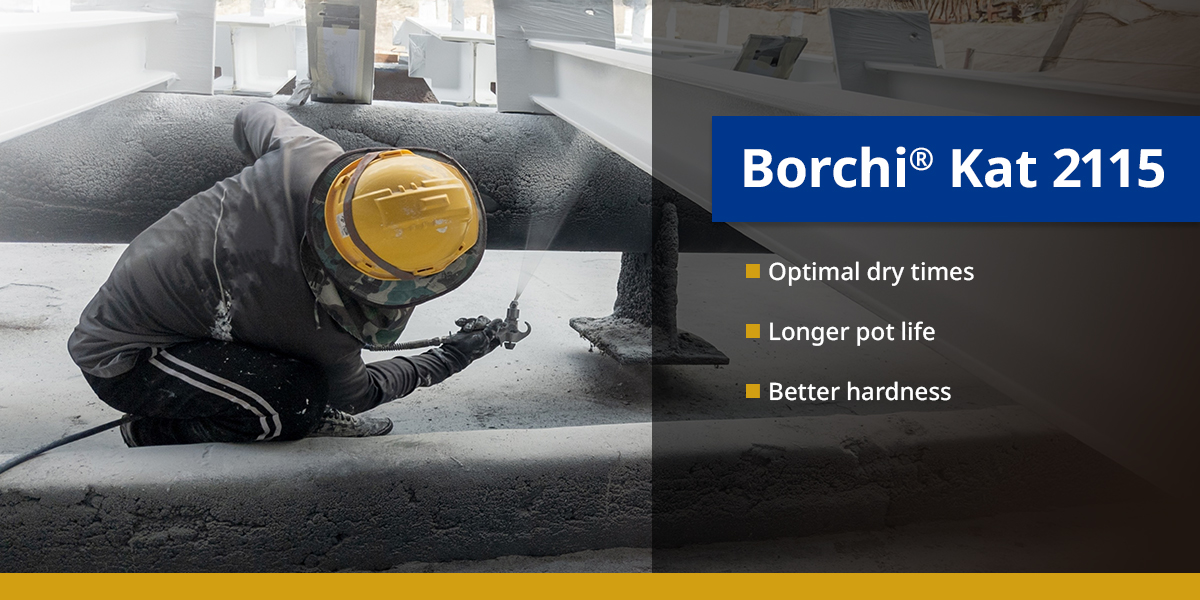
Borchi Kat 2115 was developed to address many of the common challenges associated with traditional tin-free catalysts.
This catalyst is a blend of neodecanoate metals, designed to deliver improved performance while supporting regulatory and labeling requirements. Unlike conventional tin-free catalysts like bismuth octoate, Borchi Kat 2115 is 2-ethylhexanoate-free, which can help further improve labeling characteristics in coatings.
Performance Advantages of Borchi Kat 2115
Extensive testing in polyurethane coating systems demonstrates how Borchi Kat 2115 can help formulators overcome the limitations often associated with tin-free technologies.
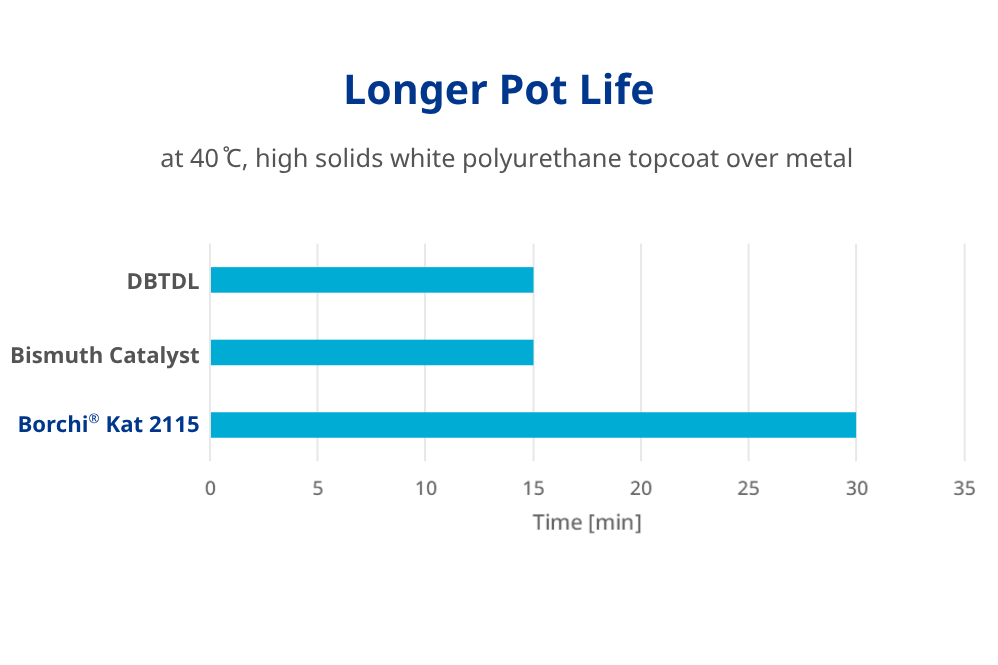
Longer Pot Life
Compared to DBTDL and DOTL and traditional bismuth catalysts, Borchi Kat 2115 provides longer pot life, giving applicators more working time during coating applications.
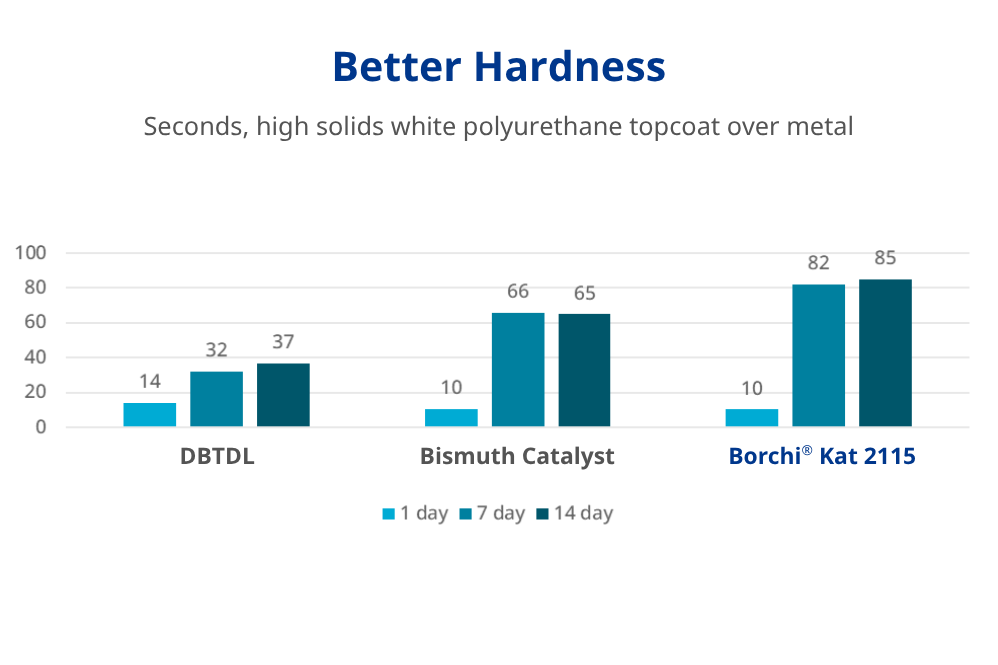
Better Hardness
Borchi Kat 2115 promotes stronger hardness development than DBTDL and bismuth, supporting durable coatings with improved mechanical performance.
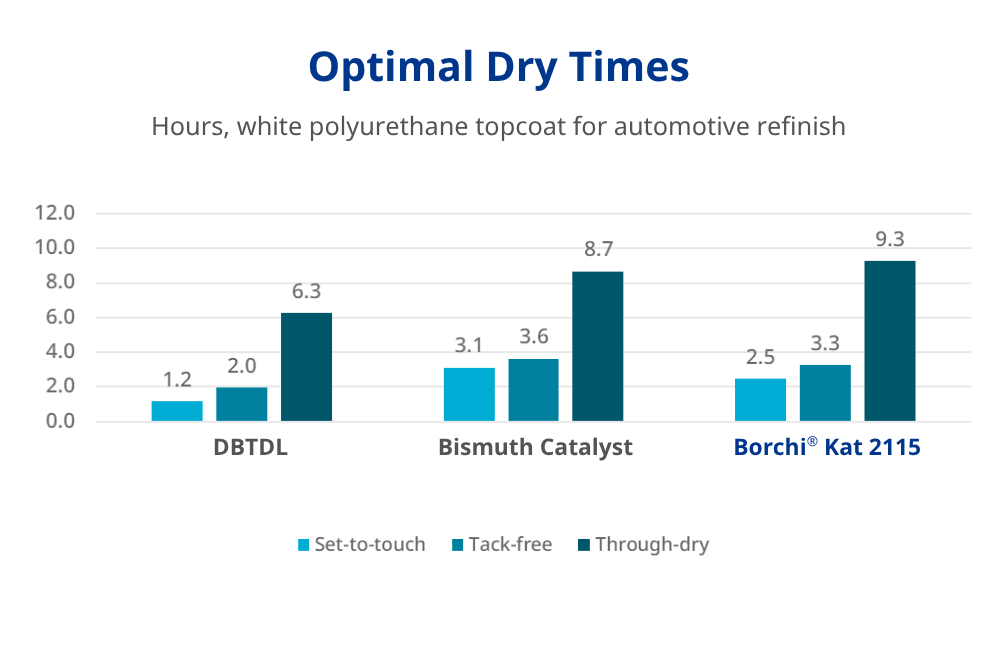
Optimal Drying Performance
Borchi Kat 2115 maintains competitive drying times compared with leading tin-free catalysts, helping preserve productivity in coating processes.
Reduced Yellowing
The catalyst system supports good color stability and reduced yellowing over time, which is especially important for pigmented and clear coatings.
Maintained Gloss and Corrosion Resistance
Formulations using Borchi Kat 2115 maintain high gloss levels and strong corrosion protection, ensuring coatings meet demanding industrial performance requirements.
Where Borchi Kat 2115 Can Be Used
Borchi Kat 2115 is suitable for a wide range of polyurethane coating applications, including:
- Automotive refinish coatings
- General industrial coatings
- Coil coatings
- Protective and marine coatings
- Pigmented and clear polyurethane systems
It can be used in both one-component and two-component polyurethane formulations for solventborne systems and is typically added at 0.02–0.15% on solid binder, depending on the formulation.
A Smarter Approach to Tin-Free Catalysts
The transition away from tin catalysts is reshaping polyurethane formulation strategies across the coatings industry. While many tin-free catalysts exist, their performance can vary widely depending on chemistry and system compatibility.
Borchi Kat 2115 was designed to provide a balanced solution—combining regulatory advantages with the performance properties formulators expect from high-quality polyurethane catalysts.
For coatings manufacturers seeking a tin-free catalyst that delivers longer pot life, better hardness, and optimal curing performance, Borchi Kat 2115 offers a compelling alternative.
See how Borchi Kat 2115 performs in your polyurethane coatings.
Request a sample or explore the product specifications to start evaluating this next-generation tin-free catalyst.
Have questions about catalyst selection or formulation optimization? Contact our technical team.
Share

Related Articles
Your Top Questions About Tin-Free Catalysts in DTM Coatings — Answered
Direct-to-metal (DTM) coatings are expected to deliver fast drying, strong adhesion, long-term durability, and reliable corrosion resistance while meeting global...
LEARN MORE »
Optimize Exterior Paint Dry Times and More with Curing Additives
Whether to paint depends on the weather…or does it? To achieve the best results, paint projects typically need to be...
LEARN MORE »
Looking for a Drier Accelerator Alternative?
Accelerate Coating Performance with Dri-Rx® HF Paint Drying Accelerator The Role of Drier Accelerators in Coatings Reducing return-to-service times...
LEARN MORE »