



Designing Decorative Coatings for Unpredictable Conditions
March 9, 2026 | Blog
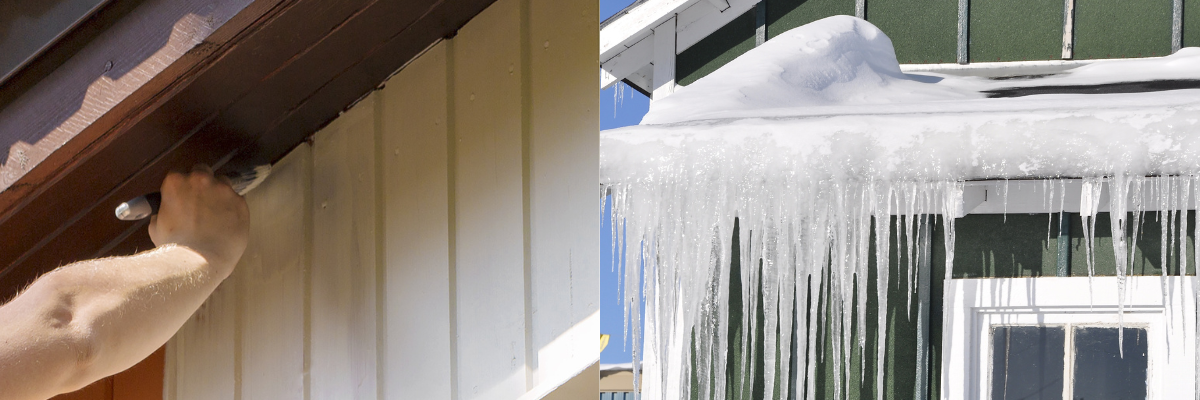
Architectural and decorative coatings aren’t always applied under ideal circumstances. In the real world, temperature shifts, humidity swings, and seasonal constraints are part of everyday applications—especially architectural coatings used on doors, trim, wood, and exterior surfaces.
Designing coatings that perform consistently under these unpredictable conditions requires more than aesthetic focus. It requires formulations that are resilient, adaptable, and forgiving when conditions aren’t perfect.
 When Conditions Work Against You
 When Conditions Work Against You
Environmental variability can introduce challenges at multiple stages of application:
- Cooler temperatures can slow curing and extend dry times
- High humidity may affect film formation and surface quality
- Seasonal changes can narrow the window for exterior application
- Storage and aging can amplify instability
For formulators, the challenge isn’t eliminating these variables; it’s formulating coatings that can perform despite them.
Why Drying and Curing Strategy Matters
In alkyd-based architectural coatings, curing is one of the most condition-sensitive stages. Performance from traditional cobalt driers can struggle under adverse conditions, raise regulatory concerns, and contribute to yellowing and wrinkling in thick film builds.
Borchi® OXY-Coat is a high-performance, iron-based, cobalt-free drier designed to support reliable oxidative drying in short, medium, and long oil alkyd systems. Compared to traditional cobalt carboxylates, Borchi OXY-Coat delivers:
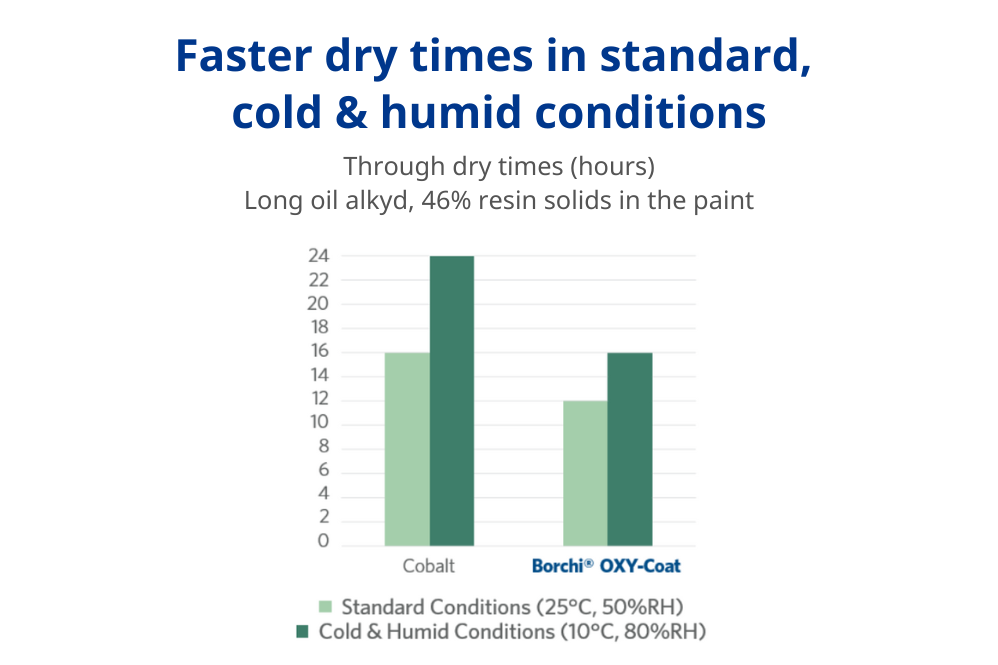
- Faster and more consistent dry times in low-temperature and high-humidity conditions
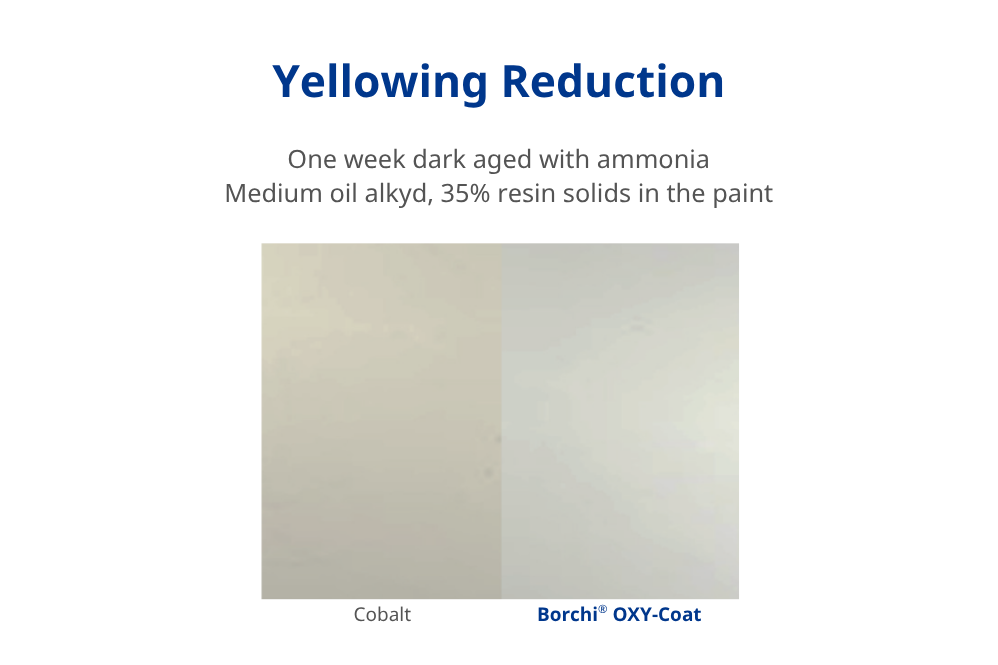
- Reduced yellowing and brighter whites
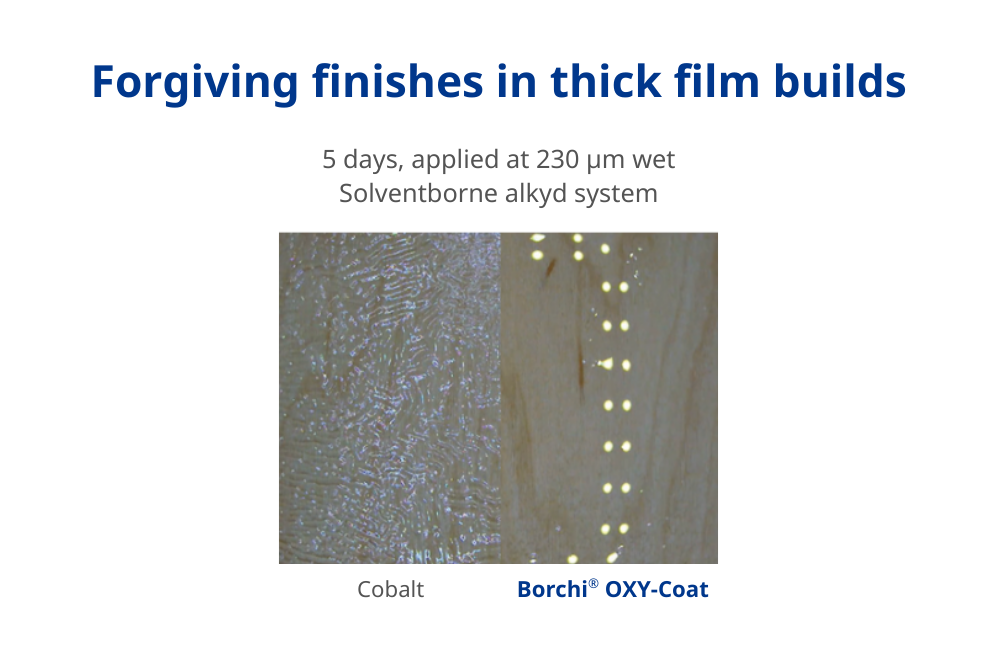
- Wrinkle prevention during over-application
- Improved corrosion resistance and wet adhesion in direct-to-metal applications

In many applications, Borchi OXY-Coat can reduce or even eliminate the need for auxiliary driers, helping extend the exterior coating season and support reliable performance when conditions are unpredictable.
Skin Prevention in Storage
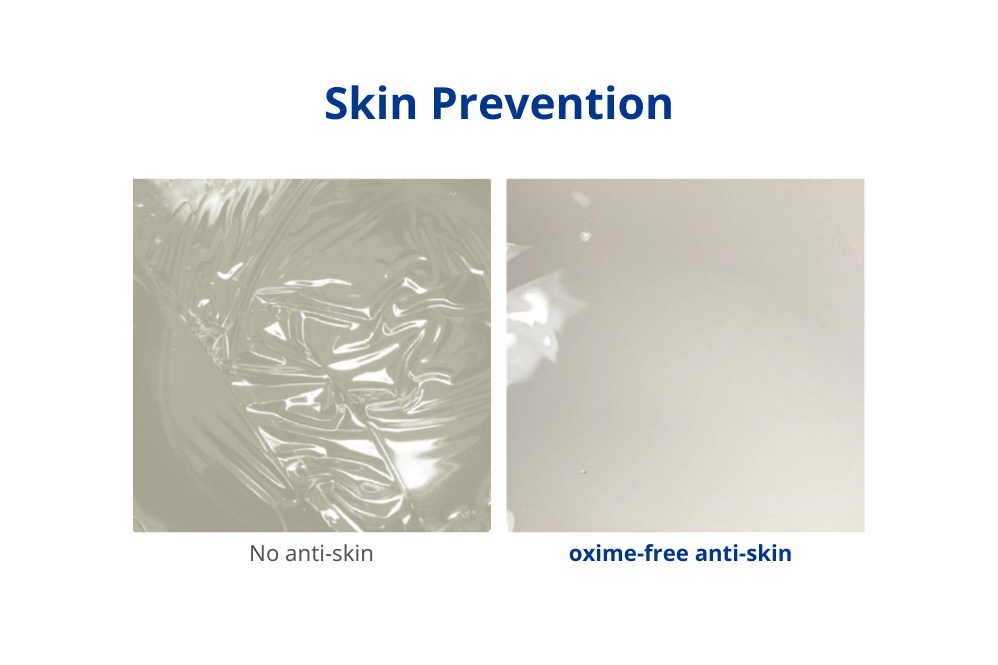
While driers are required for alkyd-based paints to achieve acceptable dry times, their reaction with oxygen often results in a “skin” forming on the surface of the coating while in process or storage, particularly if a can is not sealed properly or if moisture creeps into the can. Skin can take up to 15% of a paint and result in lumps or seeds appearing upon application.
Ascinin® anti-skinning agents help prevent skin formation, even in imperfect storage conditions. These additives are designed to be free of oximes, which -while commonly used to prevent skinning – have faced increasing regulatory scrutiny.
Stability Is Part of Weather Resistance
Environmental stress doesn’t only affect curing; it also exposes weaknesses in storage stability and application behavior. Waterborne architectural coatings must remain uniform through aging, tinting, and transport before they ever reach the wall.
Borchi Gel PN is a shear-thinning, thixotropic rheology modifier designed for waterborne paints, providing strong low-shear structure without sacrificing application feel. Its performance benefits include:
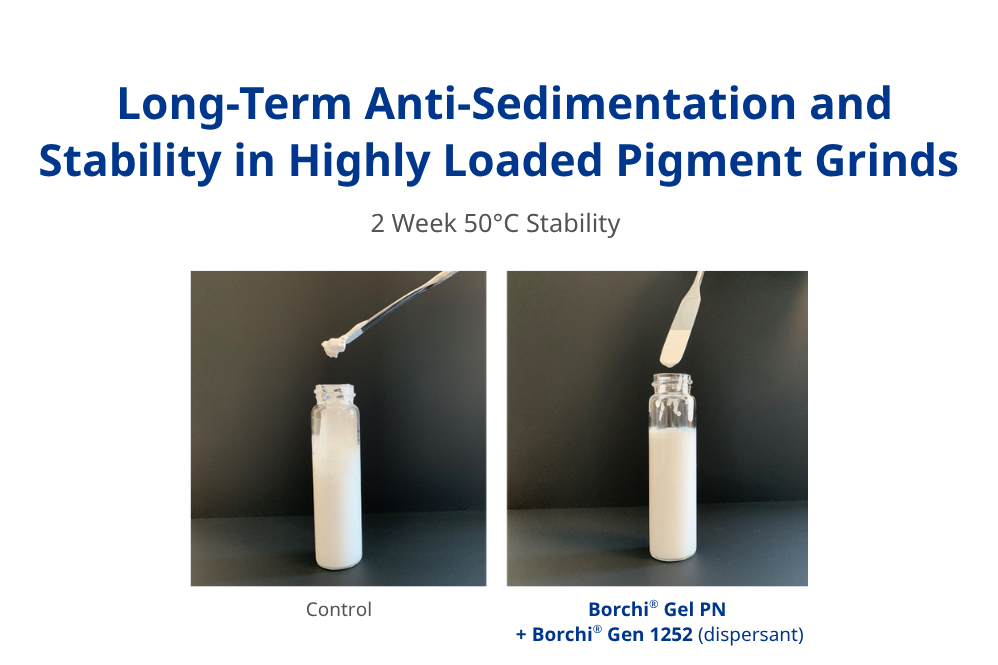
- Prevention of pigment settling and syneresis during storage
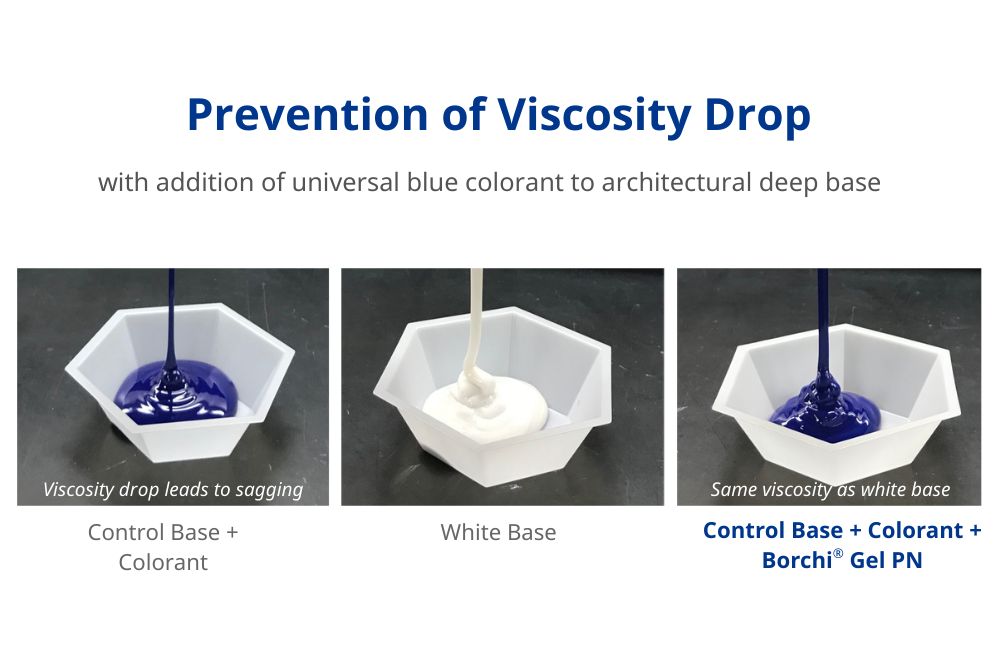
- Prevention of viscosity drop after tinting with universal colorants
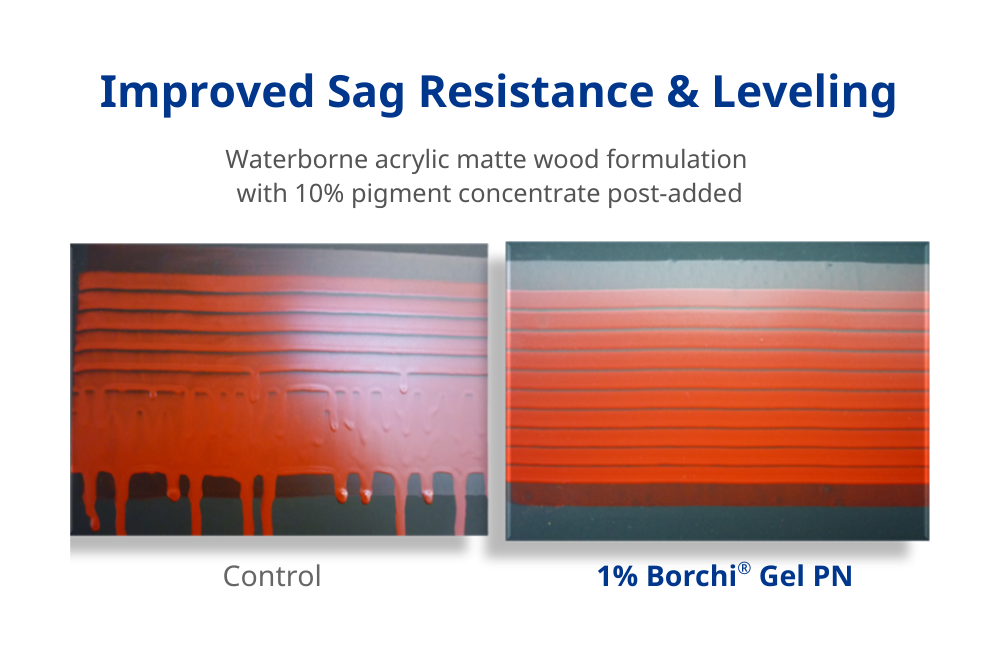
- Enhanced sag resistance without impacting leveling
Borchi Gel PN is especially effective in systems using dense inorganic pigments such as titanium dioxide, where it helps maintain dispersion stability and consistent viscosity even after heat aging.
Preventing Blocking in Decorative Wall Paints
For decorative and architectural coatings, performance isn’t only about drying and stability. Surfaces also need to maintain their finish after application—especially in environments where painted surfaces may come into contact with each other.
Blocking occurs when two painted surfaces stick together after drying. This can happen with doors, windows, cabinets, or trim when coatings soften under elevated temperatures or pressure.
Borchi Gol 1375 is a silicone-free substrate wetting and flow agent designed to improve surface properties in acrylic architectural coatings while enhancing block resistance.
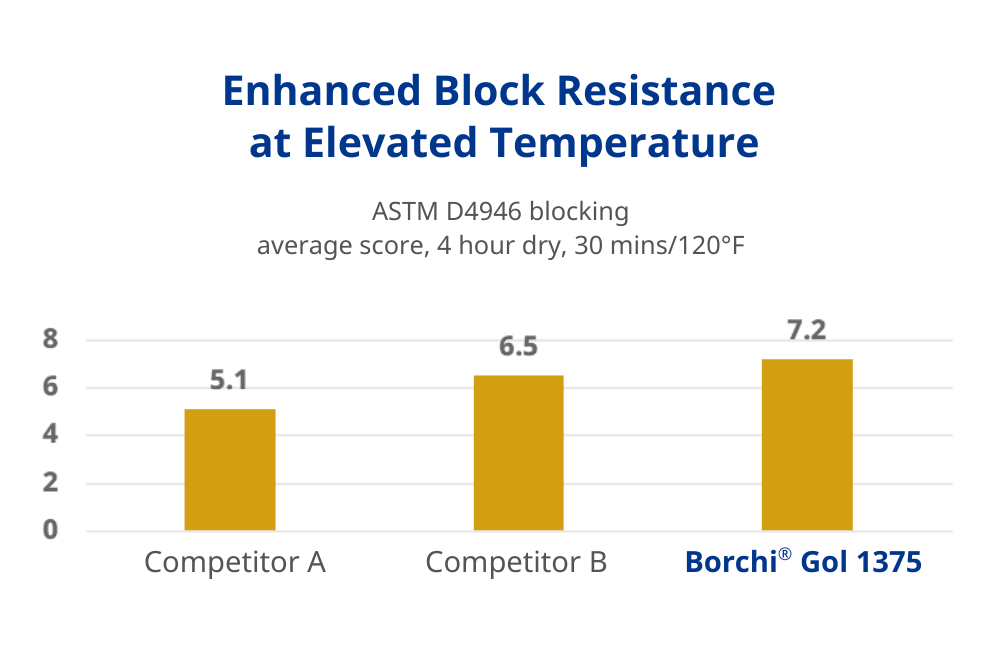
Building Flexibility into the Formulation
Coatings that perform well across unpredictable conditions share one thing in common: formulation flexibility.
Architectural coatings include a wide range of applications, from alkyd trim paints to acrylic wall paints and exterior stains, each with different performance demands.
By pairing robust drying strategies for alkyd systems with rheology control designed for stability and tinting resilience in waterborne paints, and additives that support surface performance such as block resistance or flow, formulators can reduce surprises on the jobsite and deliver more consistent results across seasons and applications.
 Designed for the Real World
 Designed for the Real World
Decorative coatings are not applied under set lab conditions, and they shouldn’t be formulated as if they will be.
With solutions like Borchi OXY-Coat, Ascinin, Borchi Gel PN, and Borchi Gol 1375, Borchers helps formulators design architectural coatings that dry reliably, stay stable, and perform confidently no matter what the environment brings.
Share

Related Articles
How moisture scavengers reduce defects in polyurethane coatings
Polyurethanes are created by reacting a polyol with an isocyanate or a polymeric isocyanate. These coatings are attractive to customers...
LEARN MORE »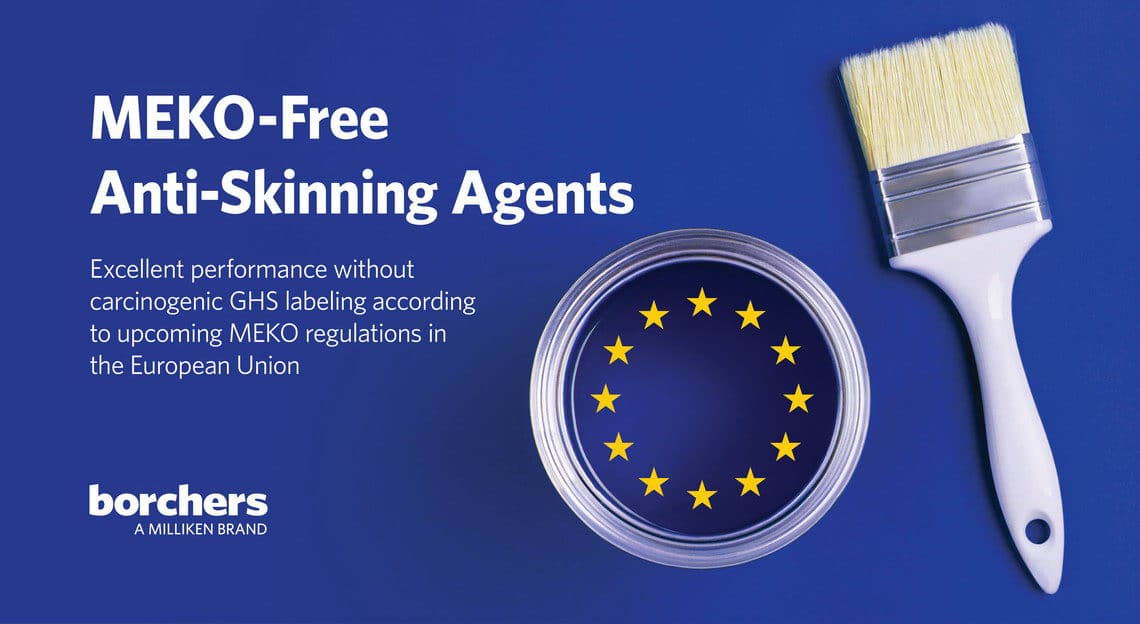
How to Avoid Upcoming MEKO Carcinogen GHS Labeling Requirements in the European Union and Reformulate Smarter
The European Union (EU) is enacting stricter Methyl Ethyl Ketoxime (MEKO) regulatory requirements beginning on March 1st, 2022. From this...
LEARN MORE »
Additives for Enhanced Aesthetics in Epoxy Floor Coatings
Epoxy coatings are a popular option for flooring. Floors installed in kitchens, garages, manufacturing plants, and office spaces are common...
LEARN MORE »