



Architectural Coating Additives: The Key to Better Color, Flow, and Durability
February 27, 2026 | Blog
What Really Makes an Architectural Coating Perform?
Looking beyond color
Architectural and decorative coatings are often judged by what we can see: color consistency, sheen, and surface appearance. But anyone involved in formulation knows that true performance goes much deeper than aesthetics alone.
Behind every smooth application, durable finish, and long-lasting appearance is a careful balance of chemistry. One that must perform under real-world conditions, across substrates, and under different climatic conditions. For architectural coatings, performance is about more than looking good on day one. It’s about how a coating behaves during application, how it cures, and how it holds up over time.
When “Decorative” Doesn’t Mean Simple
Architectural and decorative coatings face a unique set of challenges. They’re applied across a wide range of surfaces from walls and trim to doors, cabinets, and house exteriors using different methods and under varying environmental conditions.
Formulators must account for:
- Consistent color development, even with universal tinting systems
- Stability during storage and transport
- Smooth application without sagging or defects
- Reliable curing across seasonal temperature swings
- Long-term durability, gloss retention, and resistance to yellowing
Balancing all of this while maintaining visual appeal is what makes decorative coatings anything but simple.
 The Hidden Role of Additives in Coating Performance
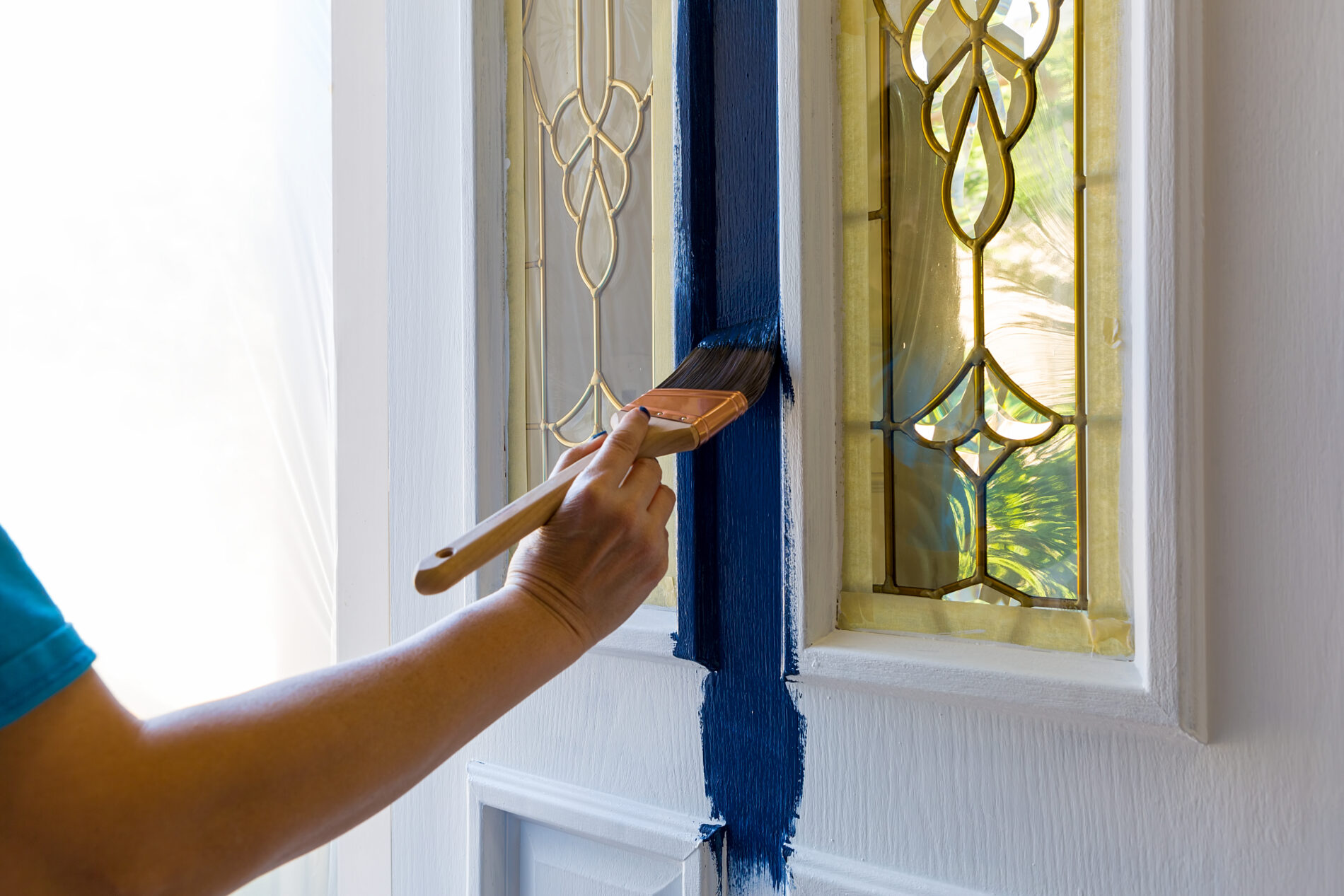
While resins and pigments often take center stage, additives quietly determine how well a decorative coating performs in practice. The right additive strategy can mean the difference between a coating that merely looks good and one that applies easily, cures reliably, and maintains its appearance over time.
In architectural applications, additives play a critical role in:
- Maximizing color acceptance and compatibility with universal colorants
- Maintaining stable viscosity and dispersion
- Improving flow, leveling, and substrate wetting
- Enhancing block resistance and surface durability
- Refining spattering tendency, hiding power, and anti-sagging
- Supporting consistent drying and curing across conditions
These behind-the-scenes contributors help ensure that color, performance, and durability work together not against each other.
Where Architectural Coating Performance Often Breaks Down
Many common issues in decorative coatings trace back to subtle formulation challenges rather than obvious material failures.
You may recognize scenarios like:
- Separation or settling after storage
- Loss of viscosity or unexpected thickening/thinning
- Inconsistent color development or poor tint acceptance
- Roller marks, sagging, or uneven leveling during application
- Blocking or sticking on doors and trim
- Yellowing or slow cure, especially under cooler or humid conditions
Often, these challenges are not solved by dramatic formulation changes. Instead, targeted additive adjustments can significantly improve outcomes without compromising aesthetics.
Small Adjustments That Make a Big Impact
High-performance additives allow formulators to fine-tune coatings for both visual appeal and real-world durability. For architectural applications, specific additive technologies play distinct roles in supporting performance:
- Rheology modifiers like Borchi® Gel PN and Borchi Gel NA help improve paint stability and reduce pigment settling while maintaining a smooth, controlled application feel particularly in the low-shear range after tinting.
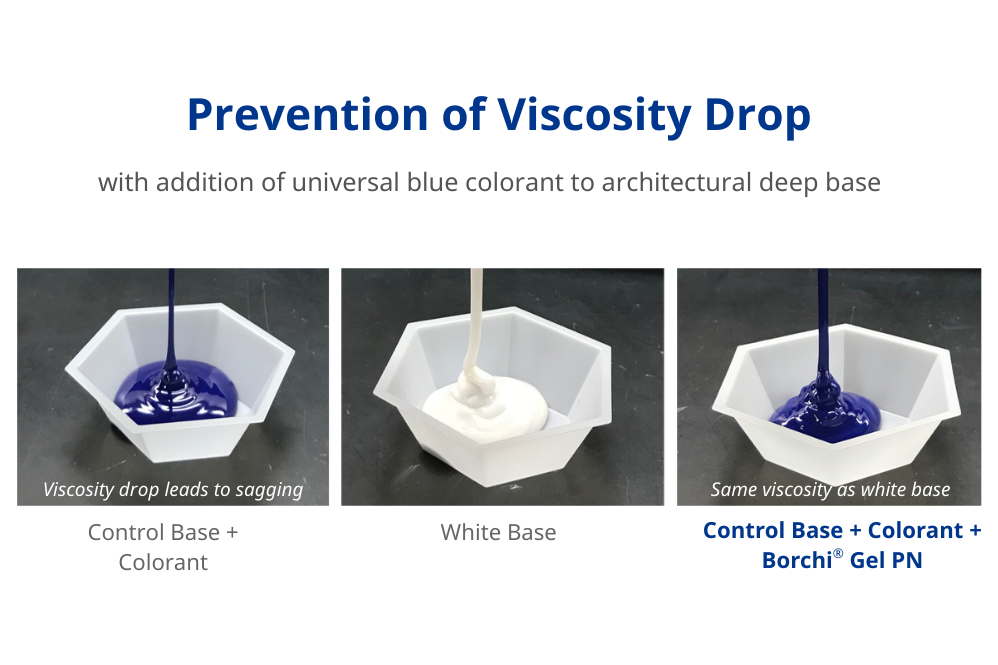
Viscosity stability is maintained after tinting by using Borchi Gel PN
- Flow and leveling agents such as Borchi Gol 1375 improve substrate wetting and enhance block resistance, helping coatings apply more evenly and perform better on doors, trim, and other high-contact surfaces.
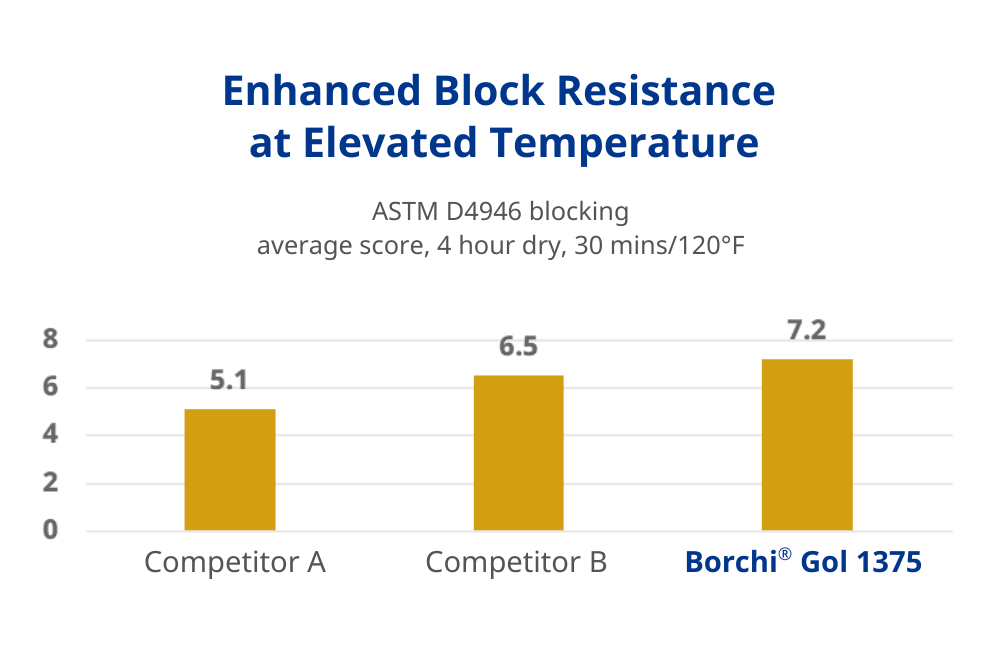
Borchi Gol 1375 shows enhanced block resistance for prevention of sticking to other substrates upon application
- Advanced cobalt-free high-performance catalysts like Borchi OXY-Coat accelerate curing, reduce yellowing, and enable reliable drying even at lower temperatures—extending the seasonal window for exterior paint application and improving performance under adverse conditions.
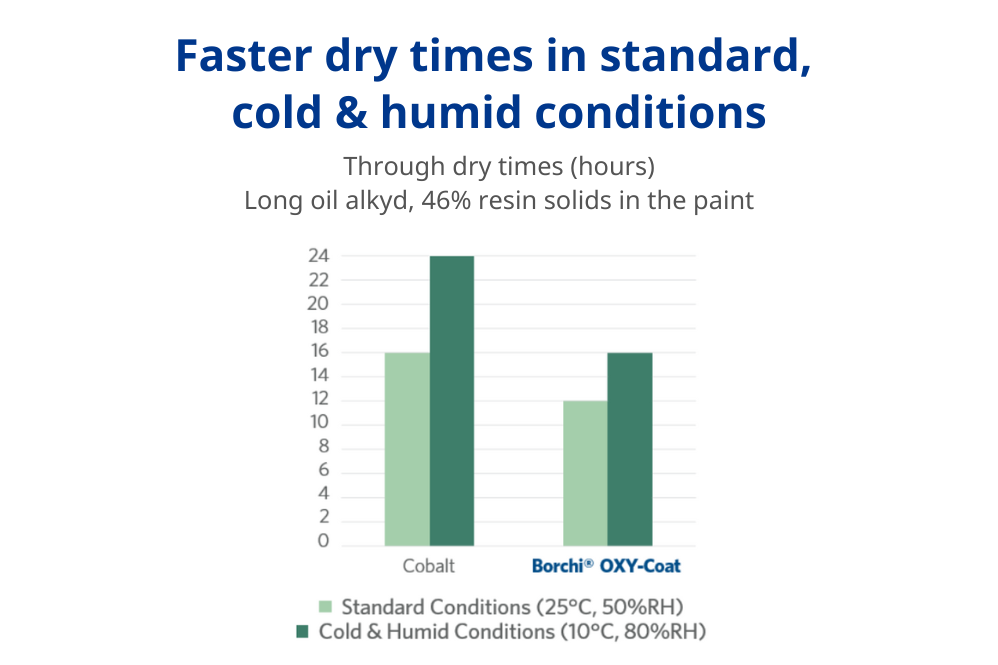
- Oxime-free anti-skin solutions, including Ascinin, used in combination with Borchi OXY-Coat, supports evolving regulatory requirements without compromising drying performance or film quality.
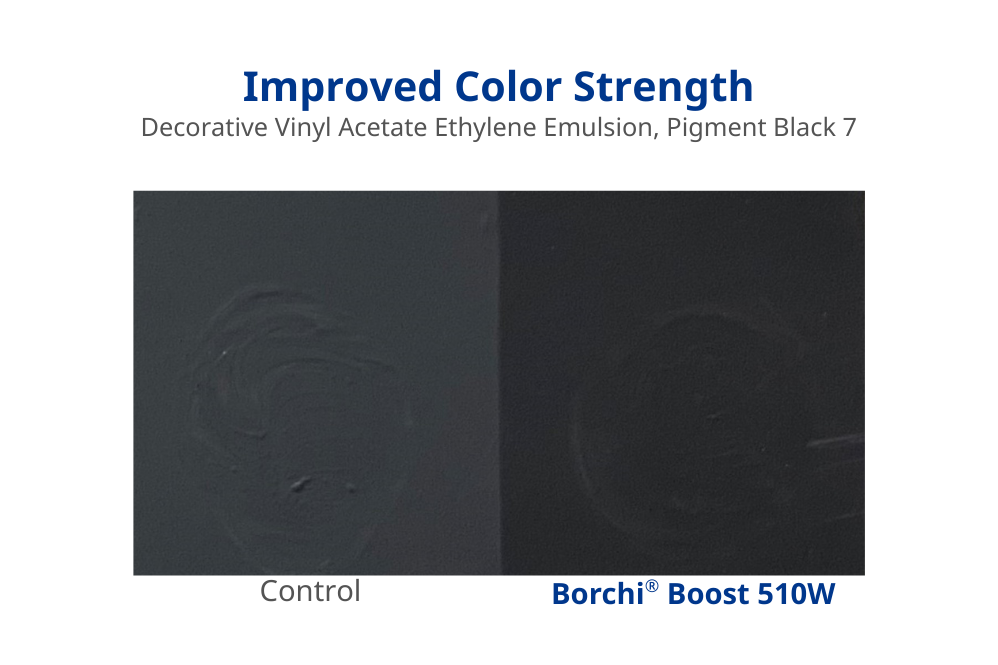
- Borchi Boost color acceptance and development enhancers strengthen color intensity and help maximize compatibility with universal tinting systems across architectural coatings.
- Borchi Add compatibilizers improve colorant compatibility and reduce rub-out when using universal water-based colorants in solvent-based alkyd systems.
These targeted improvements help coatings perform consistently from the lab to the jobsite, and from application through long-term use.
 Performance You Can See and Trust
At its best, a decorative coating delivers more than visual appeal. It applies smoothly, cures reliably, resists defects, and maintains its intended appearance over time regardless of conditions.
Achieving that level of performance requires more than great color or gloss alone. It requires a thoughtful formulation approach and the right additive tools to support every stage of a coating’s life cycle.
Borchers’ additive solutions for architectural applications are designed to help formulators achieve that balance supporting excellent color acceptance, eliminating separation, improving substrate wetting and block resistance, and enabling reliable curing without compromise.
Looking to fine-tune performance in your decorative coating formulations? Explore additive solutions designed to support architectural coatings where appearance and performance work hand in hand.
Have questions? You can also contact our technical experts.
Share

Related Articles
Rheology Modifiers in Paints & Coatings
Rheology modifiers in paints and coatings are thickener additives that improve rheological behavior in water-based coating systems, adhesives, and sealants....
LEARN MORE »
Wood Coating Additives for a Variety of Formulations
Wood coatings are essential to preserve and enhance the natural beauty of wood surfaces. They protect against environmental stressors, resist wear, and highlight the...
LEARN MORE »
Your Top Questions About Tin-Free Catalysts in DTM Coatings — Answered
Direct-to-metal (DTM) coatings are expected to deliver fast drying, strong adhesion, long-term durability, and reliable corrosion resistance while meeting global...
LEARN MORE »